

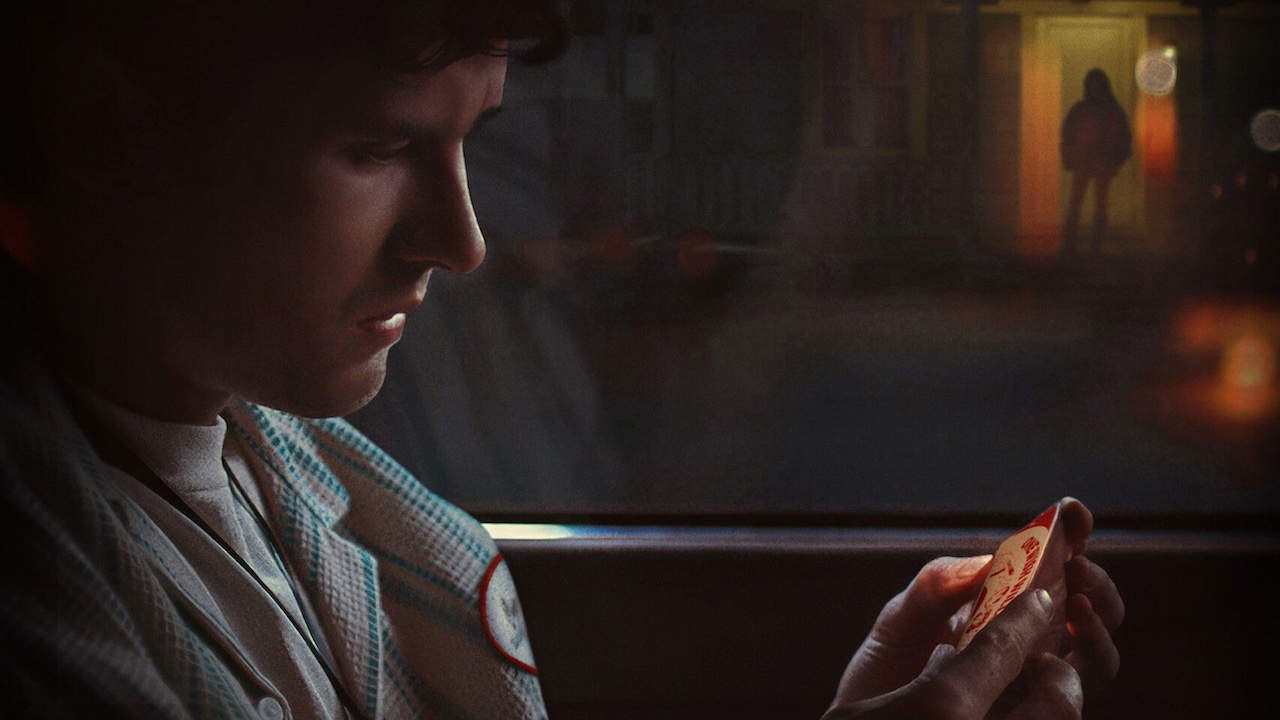
“Obsession”
Spanish Title: Obsession
Year of Production: 2025
Director: Curry Barker
Director of Photography: Taylor Clemons
Lenses: Panavision Ultra Speed MkII
Format and Aspect Ratio: ARRI Alexa 35, 1.50:1
Other: 4K Digital Intermediate
Viewed on: DCP
A 1.50:1 frame, fast Panavision glass and a mostly nocturnal palette give Curry Barker’s surprise horror hit a stronger visual identity than its budget would suggest.
The Film
“Obsession” is the first professional feature from writer, director, screenwriter and actor Curry Barker. He had previously made several short films, as well as “Milk & Serial”, a feature reportedly made for eight hundred dollars and released on YouTube. Produced for less than one million dollars, “Obsession” has since approached four hundred million worldwide, becoming one of the season’s major surprise hits.
Its protagonist is Bear (Michael Johnston), who is in love with Nikki, a co-worker who has no romantic interest in him. He therefore decides to try a strange object that promises to grant one single wish. From that moment on, Nikki — or perhaps an alternate version of Nikki — falls obsessively, and quite literally, in love with him. The consequences are severe, precisely because of the intensity of that love. The title is not merely metaphorical.
The best thing about “Obsession” is its sharp sense of humor, along with its sickly mood and atmosphere. The film often plays closer to black comedy than to the pure horror it appears to promise, even if it does contain a few effective scares. At the same time, it may be too long for the story it tells. Once the second act begins, it becomes less compelling, apart from isolated moments and individual shocks.
The film also participates in several already codified manners of contemporary prestige horror. At times, this makes it feel more solemn than its premise perhaps required.
The Cinematographer
The cinematographer is Taylor Clemons. “Obsession” appears to be his first feature with real industrial visibility, although he had already photographed Nick Janssen’s “One More Game”, which was released later, in 2026. After several short films and music videos, Clemons was given a major opportunity with this unexpected commercial success, shot in twenty principal photography days, followed by three or four additional days of reshoots.
Despite the limited budget, probably thanks to a favorable rental arrangement — a common possibility for independent productions using Panavision packages — the filmmakers were able to shoot on the ARRI Alexa 35 with vintage, high-speed Panavision spherical lenses from the 1970s or 1980s. Published sources identify the lenses as Panavision Ultra Speed MkII. Visually, however, some focal lengths also recall other Panavision families derived from Zeiss glass, such as the Super Speeds or the “Z” Series, in addition to the possible use of a zoom.
In any case, these are very special, high-end tools. They contribute decisively to giving “Obsession” a more expensive finish than one would normally expect from a production of this scale.
Visual Style Analysis
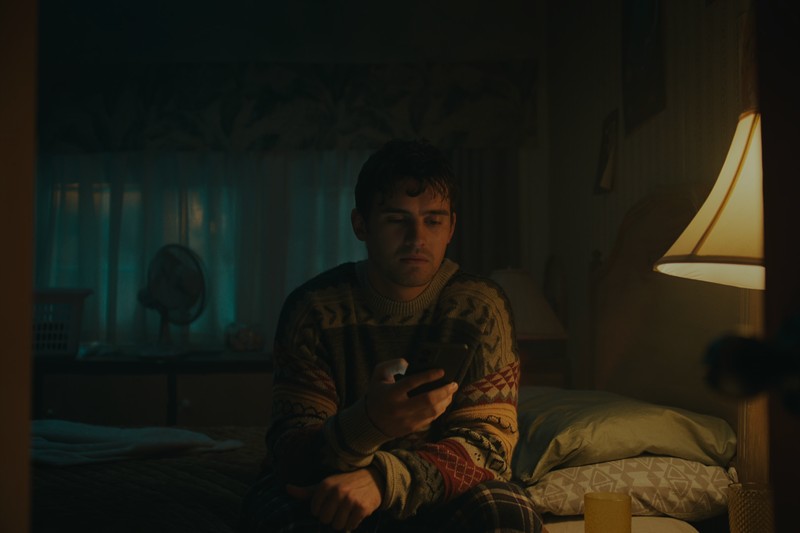
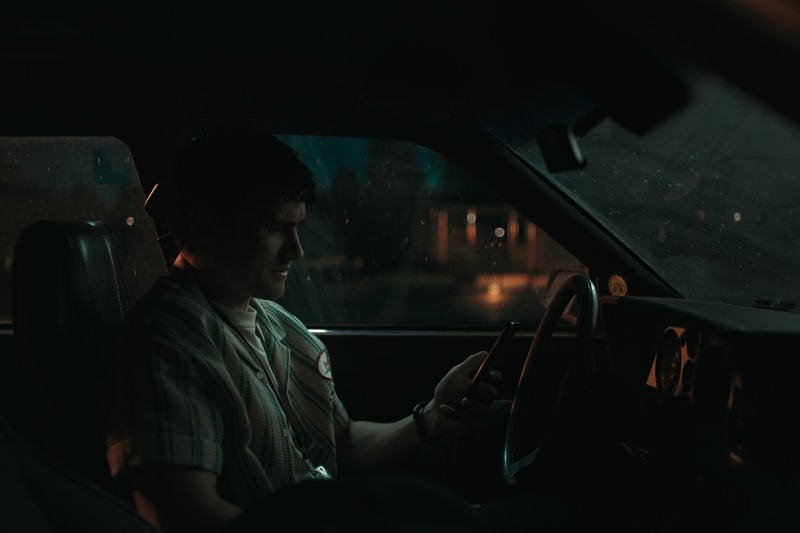
Visually, the film is largely nocturnal and is marked, almost from the beginning, by a clear search for a heavy, oppressive atmosphere. The main exceptions are the opening scene in the diner, which already announces the kind of framing the film will favor — wider, longer takes — and the scenes set at the protagonists’ workplace.
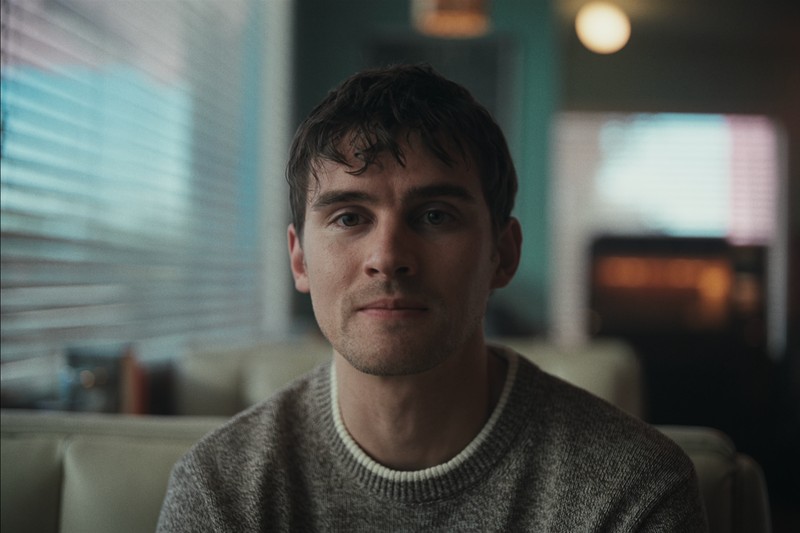
Part of that atmosphere comes from framing and composition. Using the Alexa 35 sensor in Open Gate mode, the filmmakers chose an unusual, although increasingly common, 1.50:1 or 3:2 aspect ratio. The characters are often centered within the image: centered horizontally and almost centered vertically, as if trapped in the middle of the frame. The film seems designed to hold them inside a vertical portrait, with the world around their faces reduced to patches of color.
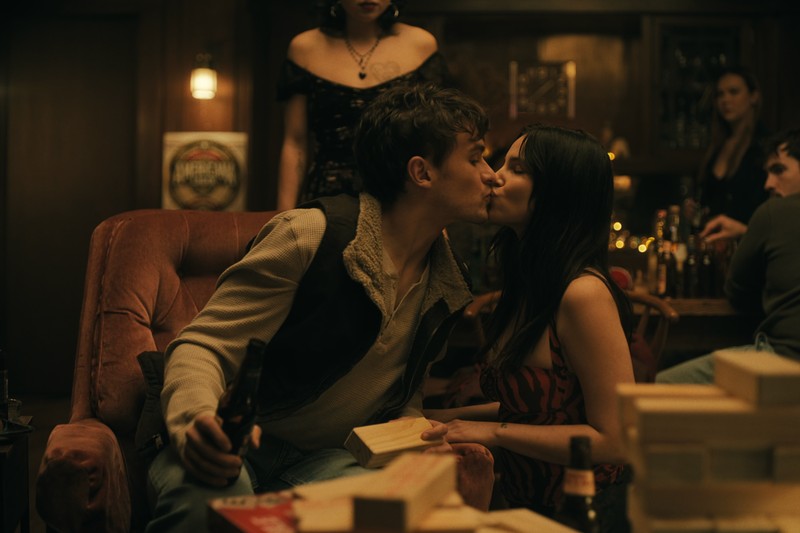
This also supports the long takes that help define the film, with relatively few cuts and a fair amount of geography around the actors. Much of that geography, however, is heavily out of focus. A key part of the look comes from using the Panavision lenses very open, perhaps somewhere around T1.4 to T2.0, even in daytime scenes. As a result, the actors are often the only sharply defined element in the frame, while the backgrounds fall into soft or complete blur. The viewer’s attention is therefore directed back to the performers.
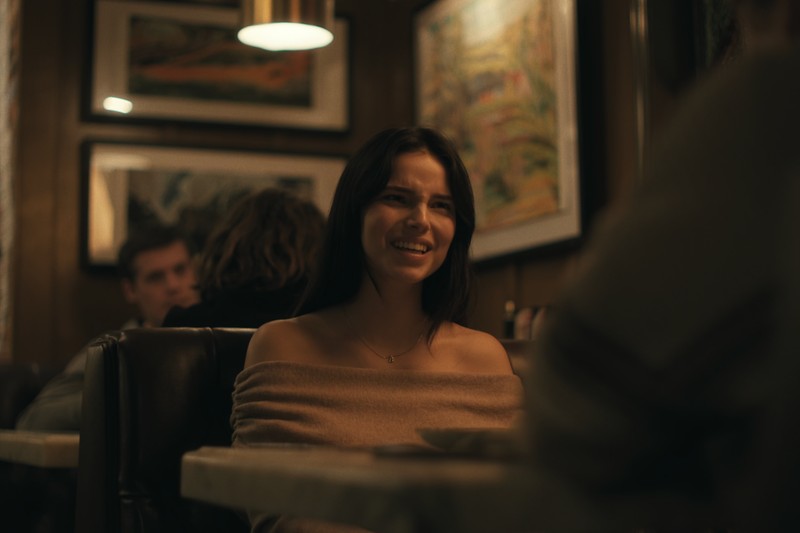
The atmosphere is also built, above all, through the night lighting. In general, Clemons works with a mixture of cyan, which identifies the night, and sodium-like orange tones, perhaps created with Industry Sodium gels or with fixtures that imitate that color. His lighting is not especially contrasty in the conventional sense. There is not a strong, graphic separation between lit and unlit areas. Rather, it is a low-key approach built around overexposed practicals and integrated sources. The cinematographer exposes more or less for the actors — who may still be slightly underexposed before the grade — and simply allows the parts of the set that those sources do not reach to fall darker.
This would be far more delicate on film, where extreme underexposure can carry a visible cost in density, grain and tonal separation. In digital, and especially with the Alexa 35, it becomes much more controllable. In fact, the blacks are not especially black, nor do they feel overly dense. It is difficult to know how much of this comes from the lighting and how much from the lenses, which are not very contrasty and even less so when used so wide open. What matters is that the filmmakers use that darkness effectively two or three times, placing Nikki inside those shadows in order to disturb or frighten the viewer. On a couple of occasions she is shown almost completely in silhouette — once with only an eyelight — producing a genuinely unsettling effect.
Conclusion
The overall result is more effective than showy, and more unsettling than technically pristine. What stands out most is that, although a film shot in only twenty principal photography days would be expected to reveal that speed, the finished image does not. It never feels as if the photography is jumping from one approach to another, nor does the tone become visibly inconsistent.
It may not be an image one falls in love with, but it works well within the context of the film. It also has a virtue that many strong pieces of cinematography share: it finds a line and a tone from the beginning, makes that line work, and the cinematographer does not abandon it. Given the limited budget and the relative inexperience of the filmmakers, it would be unreasonable to ask for much more.
“Obsession” is not a dazzling display of aesthetic bravura. But it is the kind of work that shows people behind the camera with a clear idea, and with a practical strategy for pushing that idea as far as possible on the big screen.
ON FILM & DIGITAL
© Ignacio Aguilar, 2026.
This article is part of ON FILM & DIGITAL’s English-language cinematography reviews and essays.
These texts are not plot summaries or general film reviews, but cinematography-focused essays written from the perspective of a working cinematographer.
The Author
Ignacio Aguilar, AEC is a cinematographer / director of photography based in Madrid, Spain. His work includes feature films, television, commercials and technical writing on cinematography, with experience in digital cinema, 16mm and 35mm film, anamorphic lenses, large-format capture, lens testing and film-based workflows.
He is an active member of the Spanish Society of Cinematographers (AEC), a member of the Spanish Academy of Cinema, a Sony I.C.E. Certified Expert and a Cooke SP3 ambassador.
For professional work, collaborations, lectures or workshops, visit his professional biography, selected works or contact page.