
“The Fugitive”
Spanish Title: El Fugitivo
Year of Production: 1993
Director: Andrew Davis
Director of Photography: Michael Chapman, ASC
Format and Aspect Ratio: 35mm spherical, 1.85:1
Other: Visual effects shot in VistaVision
Awards: Academy Award nomination for Best Cinematography; American Society of Cinematographers nomination
Viewed on: 4K HDR Blu-ray
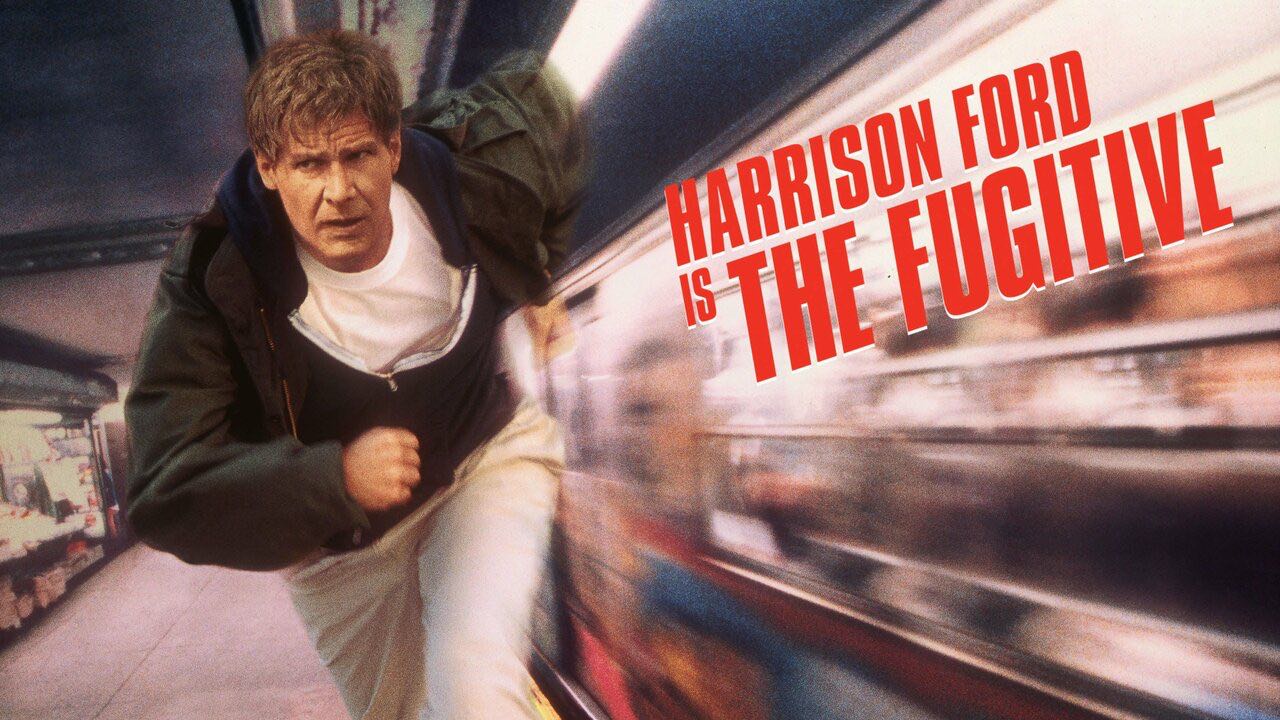
Steadicam, integrated practical light and studio-scale naturalism: Michael Chapman gives The Fugitive a low-profile visual efficiency that remains exemplary.
The Film
The Fugitive, directed by Andrew Davis, is the feature-film adaptation of the television series of the same name, which originally aired from 1963 to 1967. Harrison Ford plays Richard Kimble, a Chicago surgeon convicted and sentenced to death for the murder of his wife, despite declaring his innocence. During a prison transfer, the bus carrying him suffers a serious accident. Kimble escapes and begins a search for the real killer, trying to prove his innocence while remaining on the run.
At the same time, he is pursued by a federal marshal, played by Tommy Lee Jones, and his team. The Fugitive was a major commercial success and also received considerable awards recognition. It was even nominated for Best Picture at the Academy Awards, while Jones won the Oscar for Best Supporting Actor. The extent of that recognition may be open to discussion, but it does reflect the film’s high level of craft. In many respects, it comes very close to being a model studio action thriller.
Julianne Moore, in a brief role, Joe Pantoliano, Sela Ward, Andreas Katsulas and Jeroen Krabbé complete the cast. The film’s effectiveness lies less in originality than in construction: clean dramatic stakes, strong geography, physical action that remains readable, and a rhythm that keeps the chase moving without losing the characters.
The Cinematographer
The cinematographer was Michael Chapman, ASC, the director of photography of Taxi Driver (1976) and Raging Bull (1980), both directed by Martin Scorsese. Chapman received his first Academy Award nomination for the black-and-white photography of Raging Bull. However, he does not appear to have started The Fugitive. That role initially belonged to the British cinematographer Frank Tidy, BSC, best known as the director of photography of The Duellists (1977), Ridley Scott’s feature-film debut.
Tidy was Andrew Davis’s regular cinematographer at the time. He had just photographed Under Siege (1992) for him and would later continue the collaboration on films such as Chain Reaction (1996). Chapman, his replacement, was nevertheless a major figure. In addition to his work with Scorsese, he had been a camera operator for Gordon Willis and later photographed The Last Detail (Hal Ashby, 1973), Invasion of the Body Snatchers (Philip Kaufman, 1978), The Man with Two Brains (Carl Reiner, 1983), Scrooged (Richard Donner, 1988), Ghostbusters II (Ivan Reitman, 1989), Rising Sun (Philip Kaufman, 1993), Primal Fear (Gregory Hoblit, 1996) and Six Days Seven Nights (Ivan Reitman, 1998), among others.
Visual Style Analysis
Despite its large budget, the image of The Fugitive is interesting precisely because Chapman remains largely faithful to the direct, naturalistic style that characterized much of his work. The production value is visible, but it does not push him toward a glossy or heavily aestheticized image. That is significant in the early 1990s, after the more overt stylization of much 1980s American cinematography.
The filmmakers also avoided the anamorphic widescreen format that might have seemed natural for this type of studio action film. That decision appears to have been made during Andrew Davis and Frank Tidy’s preproduction period. Judging from the images, the film may not even have used Panavision’s most modern Primo lenses, but rather an earlier series, possibly Super Speed lenses with Zeiss glass. In a few brief moments, the triangular iris of Zeiss T1.4 High Speed lenses — or their Panavision-mounted equivalent — also seems visible.
There is also a very light degree of filtration in at least part of the film, almost invisible. It could be Black Pro-Mist, Ultra Contrast, or another low-strength diffusion or contrast-control filter available at the time. But the overall method remains relatively simple and direct, much like Davis’s staging.
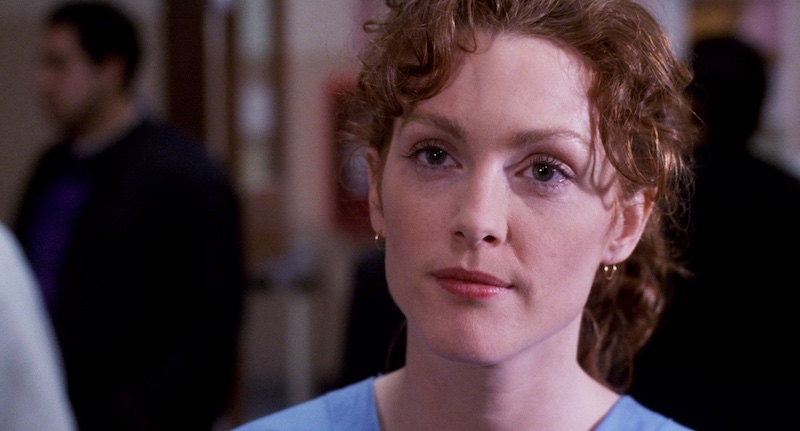
Working with his Under Siege camera team, Davis stages a large part of the action with Steadicam, and the results are as strong as in the earlier film. Many sequences are resolved through moving shots of this kind. That choice must also have shaped Chapman’s lighting, because in many scenes the camera reveals almost the whole set or location within a single shot.
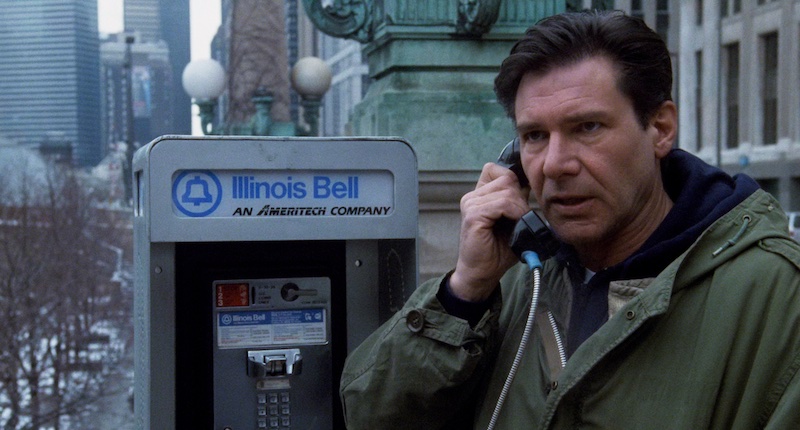
When cinema lights cannot easily be hidden, the cinematographer has to make the visible sources in the frame do real work. Chapman does this with unusual discipline. The light fixtures, windows, fluorescent units, streetlights and practical sources are not merely decorative motivation. They become part of the actual exposure strategy.
In interiors controlled by Chapman, this is relatively manageable with fast lenses used at wide apertures and 500T film stocks. The challenge increases in larger real locations, where the camera can move freely and the lighting must remain credible from multiple angles. This is where Chapman’s work becomes most valuable. His intervention is evident if one analyzes the image, but it rarely declares itself on screen.
In difficult scenes such as the rooftop fight, with the city background very well held, it is clear that Chapman had to light the foreground. But he does it in a way that allows the off-camera sources and the integrated practicals to belong to the same visual world. The result is realistic not because it is untouched, but because the intervention is absorbed into the location.
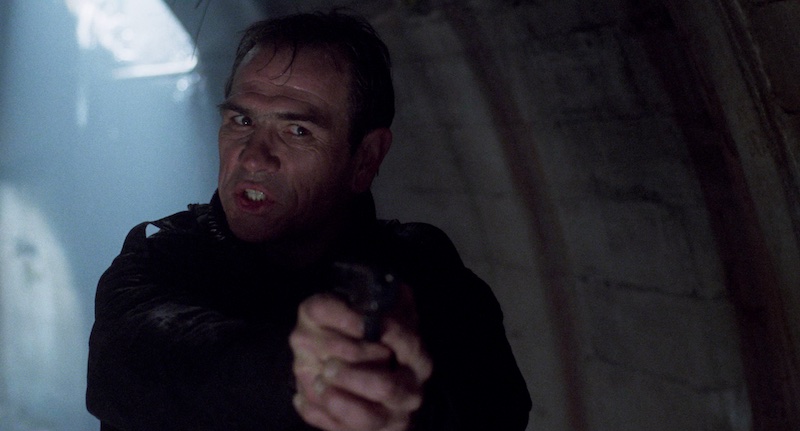
The tunnel sequence is especially interesting. It is lit through beams of light that leave large areas in shadow, allowing the actors to move in and out of darkness as they run. In some night exteriors, as was common at the time, Chapman uses blue backlight — for instance when Harrison Ford escapes through the woods. But in the urban night scenes, he generally tries to blend his work with the existing light of the city, making the photographic design less conspicuous.
Conclusion
The results are generally excellent, above all because Chapman achieves an unusual low-profile image within a major action production. That is not especially common. In some ways, his work recalls the late John Alcott’s photography on No Way Out (1987), another film shot and lit with considerable skill and assurance, but without any need to call attention to itself. The comparison becomes even more interesting when one remembers that Alcott was also the cinematographer of Barry Lyndon.
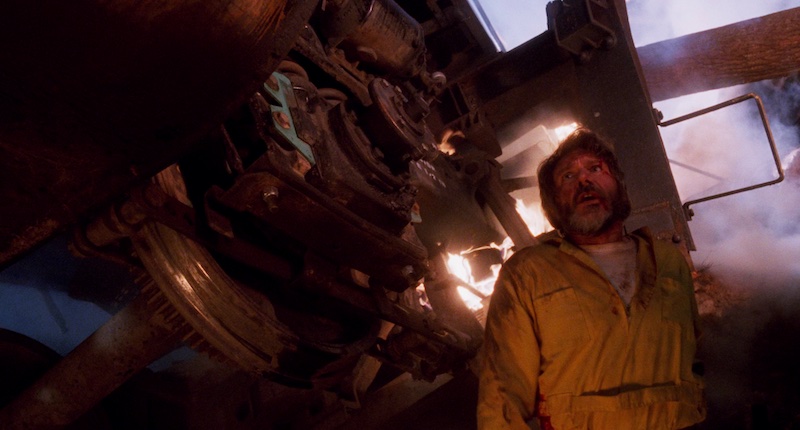
In The Fugitive, the most spectacular sequence is unquestionably the prison bus accident and subsequent train collision. It remains completely convincing, including the visual effects. But beyond that set piece, what stands out most is the camera work already mentioned: a Steadicam-driven approach that is essential to the film’s ability to show pursuers and pursued within active, continuous space.
With this film, Chapman received his second Academy Award nomination and the only American Society of Cinematographers nomination of his career. That is significant. It shows that, although it is not always the case, this type of cinematography — discreet, functional and deliberately resistant to display — can still be recognized very positively by other cinematographers.
ON FILM & DIGITAL
© Ignacio Aguilar, 2026.
This article is part of ON FILM & DIGITAL’s English-language cinematography reviews and essays.
These texts are not plot summaries or general film reviews, but cinematography-focused essays written from the perspective of a working cinematographer.
The Author
Ignacio Aguilar, AEC is a Spanish cinematographer based in Madrid. His work spans feature films, television, commercials and technical writing on cinematography, with experience in digital cinema, 16mm and 35mm film, anamorphic lenses, large-format digital capture and practical lens testing.
Read more articles and reviews in Spanish at ON FILM & DIGITAL, or visit the main cinematography portfolio at ignacioaguilardop.com.