

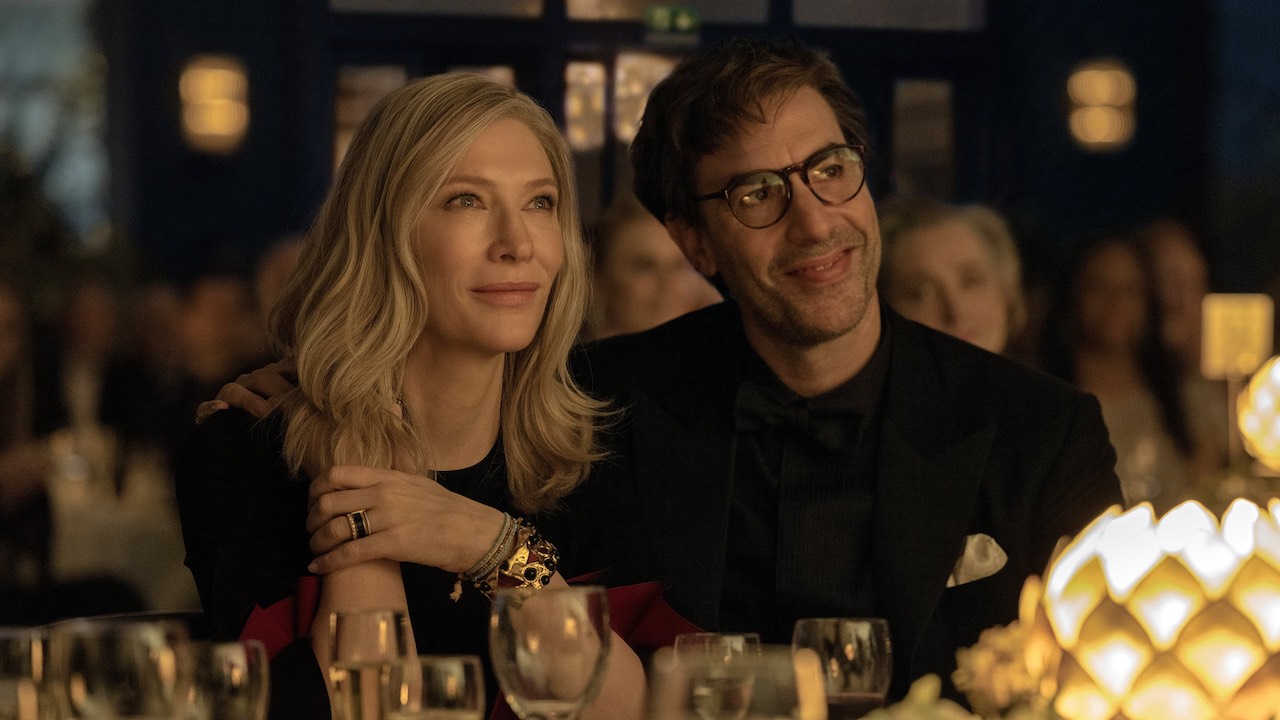
“Disclaimer”
Spanish Title: Disclaimer
Year of Production: 2024
Director: Alfonso Cuarón
Directors of Photography: Emmanuel Lubezki, ASC, AMC; Bruno Delbonnel, ASC, AFC
Lenses: Leitz Summilux-C, ARRI/Zeiss Master Prime, Angénieux, Fujinon
Format and Aspect Ratio: ARRI ALEXA 35 (ARRIRAW 4.6K), 2.00:1
Other: 4K Digital Intermediate
Awards: American Society of Cinematographers (Mini Series), nom.; British Society of Cinematographers (TV), nom.
Emmanuel Lubezki and Bruno Delbonnel turn “Disclaimer” into a study of looking, memory and the unstable reconstruction of truth.
The Series
Adapted from the novel by Renée Knight, “Disclaimer” is a television miniseries written and directed by Mexican filmmaker Alfonso Cuarón with the formal ambition of a feature film. Its complex narrative follows two main characters. On one side is Catherine (Cate Blanchett), married to Robert (Sacha Baron Cohen) and mother to Nicholas (Kodi Smit-McPhee). On the other is Stephen (Kevin Kline), whose wife (Lesley Manville) and son (Louis Partridge) died some time earlier. The lives of Catherine and Stephen change drastically when he discovers the manuscript of a book written by his late wife. The book is about Catherine.
Produced for Apple TV+ on what appears to have been an enormous budget — with a 240-day shoot and a total running time of 343 minutes — “Disclaimer” is nevertheless a deeply authorial work by Cuarón. Its construction depends on the different treatment given to each of its central figures: the fragmentation of the narrative, the changes in point of view, the use of sound, Finneas O’Connell’s excellent score and, above all, the image. The performances are also extraordinary. Blanchett is very good, but Kevin Kline’s work, and Leila George’s performance as the young Catherine, deserve close study. What remains striking is that a project of this scale, authorship and formal ambition passed relatively quietly. The best way to experience it is to know as little as possible.
The Cinematographers
“Disclaimer” has two cinematographers, in a highly unusual collaboration: Emmanuel Lubezki, ASC, AMC, and Bruno Delbonnel, ASC, AFC. Lubezki photographed most of Cuarón’s career, with the exceptions of “Harry Potter and the Prisoner of Azkaban” (2004) and “Roma” (2018). In other words, he shot for his friend and compatriot such films as “A Little Princess” (1995), “Y tu mamá también” (2001), “Children of Men” (2006) and “Gravity” (2013), for which he won the first of three consecutive Academy Awards. The other two were “Birdman” and “The Revenant,” both directed by Alejandro G. Iñárritu. Although he has shot very little cinema since then, Lubezki remains not only one of the great cinematographers currently working, but one of the major figures in the history of the medium.
Bruno Delbonnel first came to prominence in his native France through his work with Jean-Pierre Jeunet, including “Amélie” (2001) and “Un long dimanche de fiançailles” (2004). His reputation later took him to the Coen brothers — most notably the beautiful “Inside Llewyn Davis” (2013), plus «The Ballad of Buster Scruggs» (2018) — and to Joel Coen alone on “The Tragedy of Macbeth” (2021). He has also worked with Tim Burton, for instance on “Dark Shadows” (2012) and “Big Eyes” (2014), with Joe Wright on “Darkest Hour” (2017), and more recently with Wes Anderson on “The Phoenician Scheme” (2025). To date, he has received six Academy Award nominations, but has yet to win.
Visual Style Analysis
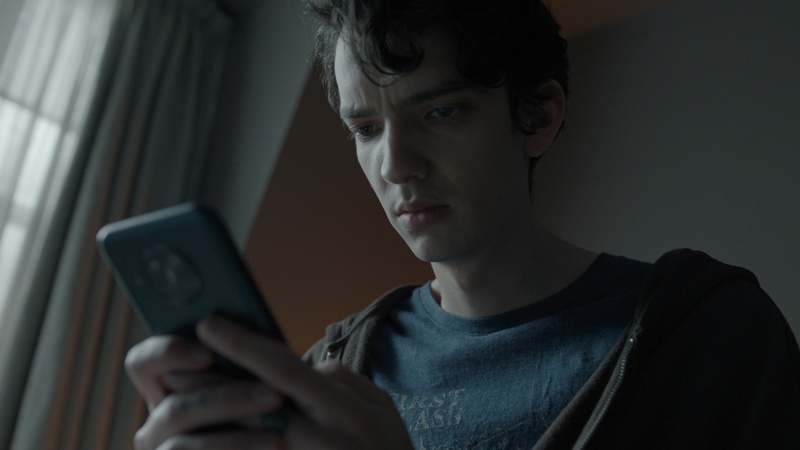
Emmanuel Lubezki was the first cinematographer to join the project. According to what he and Delbonnel explain in American Cinematographer, Cuarón and Lubezki initially decided that Lubezki would handle all the scenes involving Cate Blanchett — and her younger alter ego, played by Leila George — while another cinematographer would photograph Kevin Kline’s scenes. The reason was the difference in point of view. Catherine is mostly observed. Stephen’s world is more subjective. The idea was to create two consistent but distinct visual languages, with Cuarón acting as the unifying intelligence, since Lubezki and Delbonnel barely worked together and did not watch each other’s material.
It was then that Lubezki suggested Delbonnel for the other half of the project. In the final structure, almost everything involving Blanchett belongs to Lubezki, and everything with Kline belongs to Delbonnel. Italy is mainly Lubezki, except when Kline’s character travels there. The material with Sacha Baron Cohen without Blanchett also belongs to Delbonnel. The result is a collaboration that is probably almost unprecedented: two world-class cinematographers working on the same project, largely in London, but mostly apart, meeting only in certain shared scenes — such as the hospital material — and guided by a director who is himself an Oscar-winning cinematographer for “Roma”.
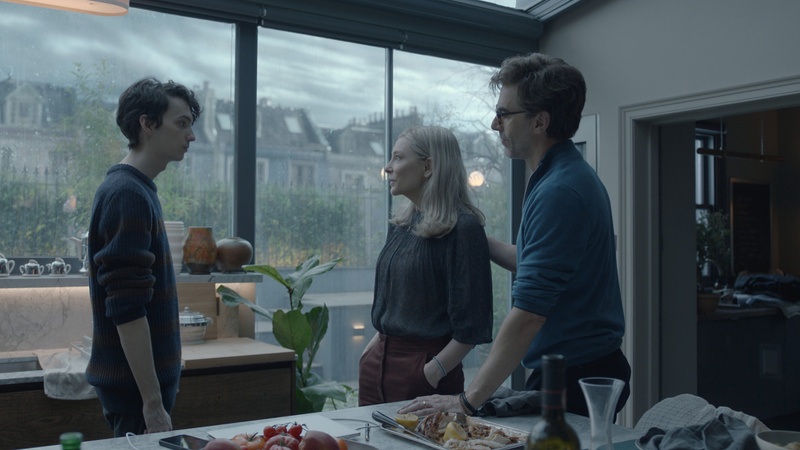
Both Lubezki and Delbonnel have built their careers as masters of artificial light, although Lubezki has also achieved some of his finest work with available light, especially with Terrence Malick on “The New World” and “The Tree of Life.” “Disclaimer” had the privilege of being able to build sets for the homes of its two main characters. Within those controlled spaces, and with artificial light fully at their disposal, the cinematographers pursue a naturalistic surface that remains highly designed. What stands out, especially in Lubezki’s work, is the way British light changes not only from one scene to the next, but often within the same scene.
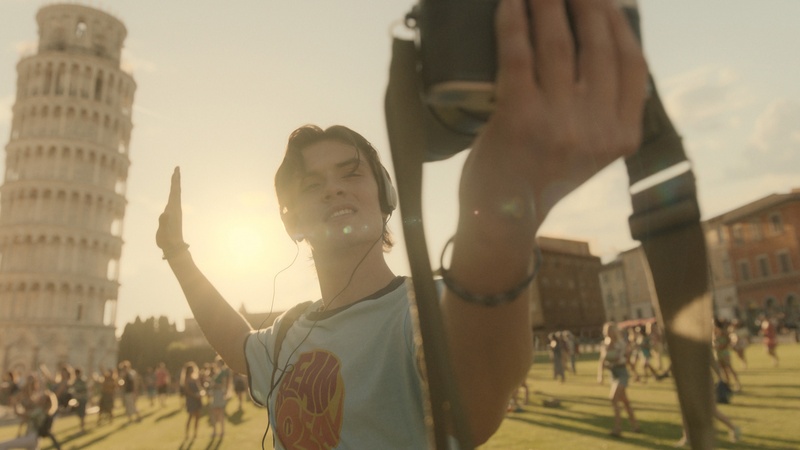
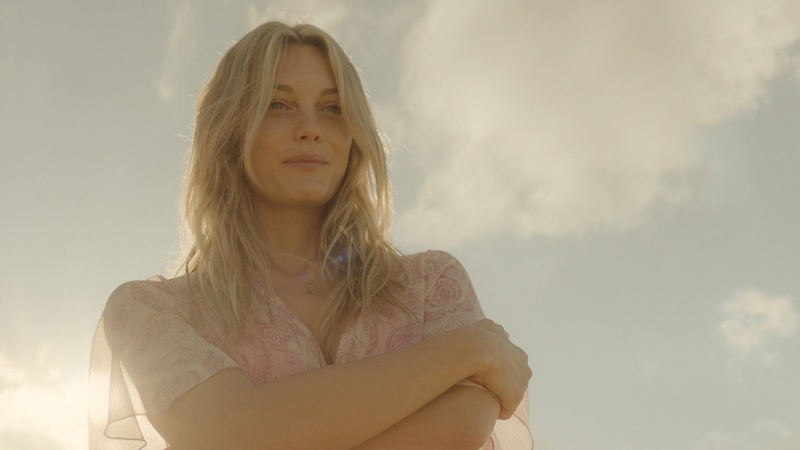
The lighting is generally high in contrast, almost always soft, and based on very large sources placed outside the set, with limited fill inside. This creates areas of shadow and underexposure, usually held against exterior daylight sources. There is also a cool, bluish and emotionally distant cast to much of the London material, in sharp contrast with the warmer flashbacks in Italy. Where the two approaches meet is in the treatment of sunlight. In London, often filtered through clouds, and in Italy, more directly, both cinematographers allow strong overexposure to shape the image. At times, Delbonnel’s highlights feel pushed very far, something already visible in “Darkest Hour.” Lubezki, meanwhile, continues to use flares as a central expressive tool, shooting toward the sun on the Italian beach and also on the stage-built house in London.
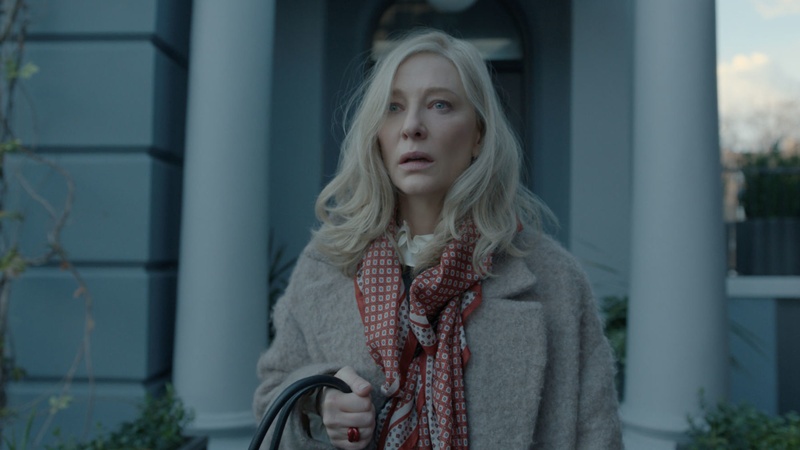
The scale of the production and the filmmakers involved is also reflected in the equipment. “Disclaimer” was one of the first productions to use ARRI’s new ALEXA 35, at a point when the camera was still a prototype. Despite the camera’s excellent highlight handling, the very strong overexposure used by both Delbonnel and Lubezki in the early part of the series makes one wonder whether, with those resources, shooting some material on 35mm film might also have been valuable. Its texture could have suited certain sections of the work.
But the choice gradually becomes clearer. The filmmakers were not looking for an image that was warmer, more tactile or more conventionally beautiful in the way a photochemical image might have been. They wanted something colder, more distant, and slightly harder to settle into. The technical approach changes according to the dramatic area. Lubezki chose to photograph Blanchett — and the Italian material — mainly with Leitz Summilux-C lenses, which he selected for being slightly softer than the Zeiss lenses. Delbonnel used ARRI/Zeiss Master Primes for the Kevin Kline scenes. For the Sacha Baron Cohen material, Angénieux and Fujinon zooms were used, often with visible zoom moves, to express the chaos of a man watching his world collapse.
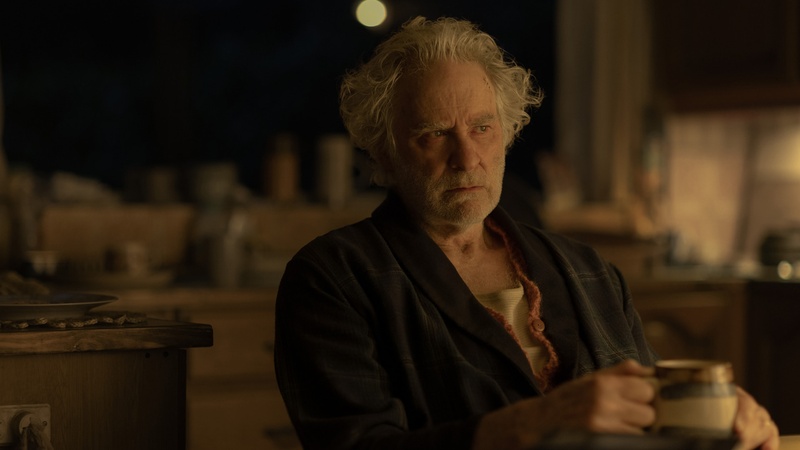
Still, the most interesting aspect of “Disclaimer” may not be the lighting itself, but Cuarón’s staging. The series is, in some sense, about observation, memory, reconstruction and the subjectivity of looking. Each scene is approached from a different position. Catherine is generally photographed in the second person: observed, as in the beach opening of the second episode, and even judged in many other moments of the miniseries. Stephen’s gaze is subjective. We see what he sees, and as spectators we discover what he discovers.
This is already clear in a small scene from the first episode. Stephen is called by the headmaster of the school where he teaches, and speaks with him and the mother of a pupil. The scene is not staged as neutral coverage. We see what Stephen sees, and we are placed with him as spectators. That duality of concepts — and the decision to assign a different cinematographer to each — is where the major interest of “Disclaimer” lies. Cuarón, supported by Lubezki and Delbonnel, does not impose a visual style simply to illustrate the story. The visual style — framing, point of view and light — becomes the central mechanism of the narrative.
Viewed on: HDTV 4K HDR
ON FILM & DIGITAL
© Ignacio Aguilar, 2026.
This article is part of ON FILM & DIGITAL’s English-language cinematography reviews and essays.
These texts are not plot summaries or general film reviews, but cinematography-focused essays written from the perspective of a working cinematographer.
The Author
Ignacio Aguilar, AEC is a Spanish cinematographer based in Madrid. His work spans feature films, television, commercials and technical writing on cinematography, with experience in digital cinema, 16mm and 35mm film, anamorphic lenses, large-format digital capture and practical lens testing.
Read more articles and reviews in Spanish at ON FILM & DIGITAL, or visit the main cinematography portfolio at ignacioaguilardop.com.