
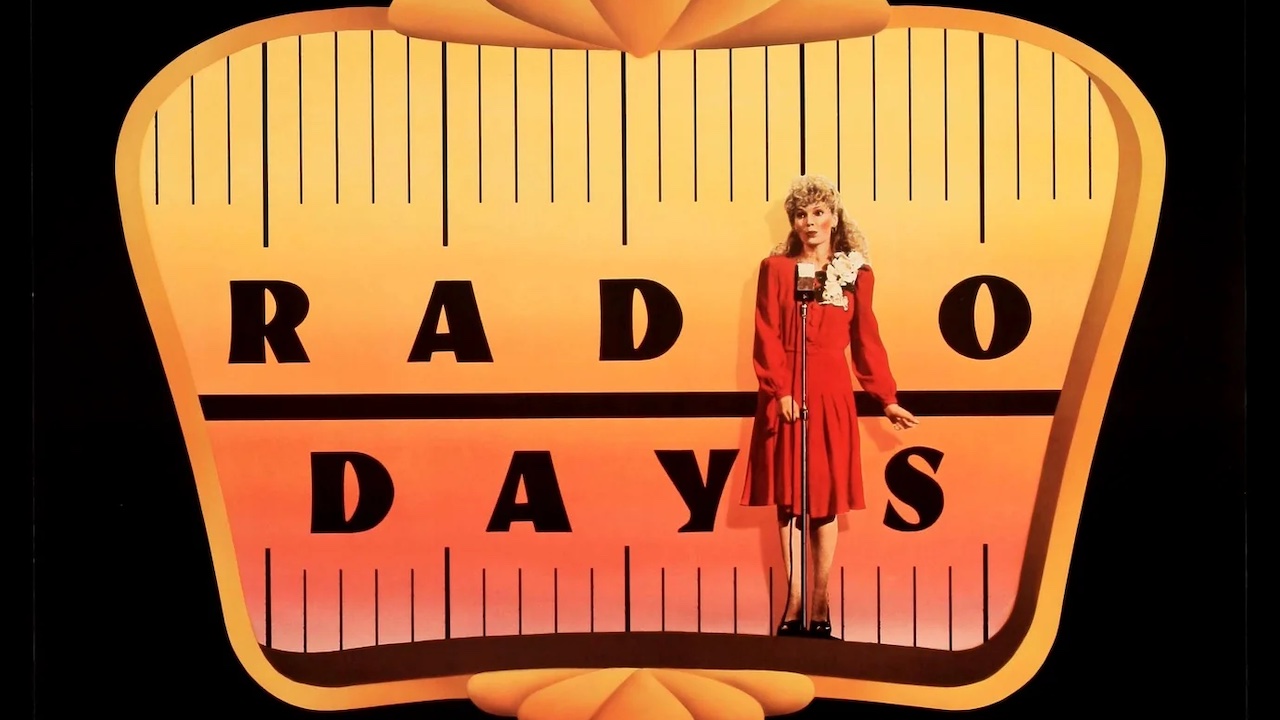
“Radio Days”
Spanish Title: Días de Radio
Year of Production: 1987
Director: Woody Allen
Cinematographer: Carlo Di Palma, AIC
Lenses: Cooke Varotal/Varopanchro, Panavision Ultra Speed MKII
Film Stock: Kodak 5247 (125T) & 5294 (400T)
Format and Aspect Ratio: 35mm spherical, 1.85:1
Viewed on HDTV
Carlo Di Palma wraps Radio Days in a luminous nostalgia, less severe than Gordon Willis’s work with Woody Allen but entirely attuned to the director’s idea of memory.
The Film
“Radio Days” is a wonderful homage by Woody Allen, who uses radio as the central device to portray the lives of a family in Queens, New York, in the early 1940s. The characters include an aspiring radio performer (Mia Farrow) and the aunt (Dianne Wiest) of the young narrator, whose adult voice is Allen’s own, making him clearly identifiable as the director’s alter ego.
Yet the best and most interesting aspect of the film is not simply the adventures and misadventures of this group of characters, all portrayed with great affection. It is the elegiac, nostalgic tone of the piece. Allen recreates a world that would become completely different, and effectively extinct, only a few years later.
The results are remarkable from a cinematic point of view. Perhaps because of its episodic structure, the film undeservedly lacks the reputation of other Allen classics such as “Annie Hall” (1977) or “Manhattan” (1979). Jeff Daniels, Danny Aiello, Diane Keaton, Kenneth Mars and Tony Roberts also appear in the film.
The Cinematographer
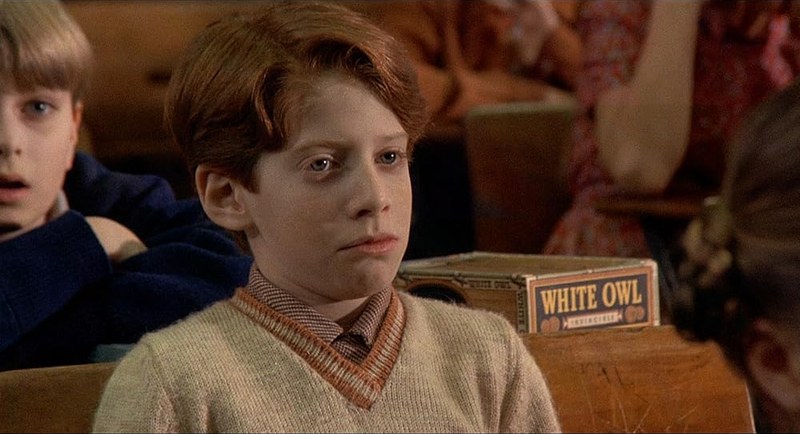
The cinematographer of “Radio Days” was the Italian Carlo Di Palma [AIC], whom Woody Allen had apparently admired since Di Palma’s work on Michelangelo Antonioni’s “Il deserto rosso” (1964) and “Blow-Up” (1966). According to an article in the January 1993 issue of “American Cinematographer”, Allen had in fact tried to work with the Italian cinematographer as early as the late 1960s or during the 1970s.
But Allen’s very fruitful association with Gordon Willis, from “Annie Hall” (1977) through “The Purple Rose of Cairo” (1985), postponed his collaboration with Di Palma until “Hannah and Her Sisters” (1986). They would go on to make ten films together over a period of twelve years, although Allen also worked during those years with Sven Nykvist, up to “Deconstructing Harry” (1998), including the excellent “Husbands and Wives” (1992) and “Manhattan Murder Mystery” (1993).
Di Palma was also the cinematographer of “The Appointment” (Sidney Lumet, 1969), “The Black Stallion Returns” (Robert Dalva, 1983) and “The Secret of My Success” (Herbert Ross, 1987).
Visual Style Analysis
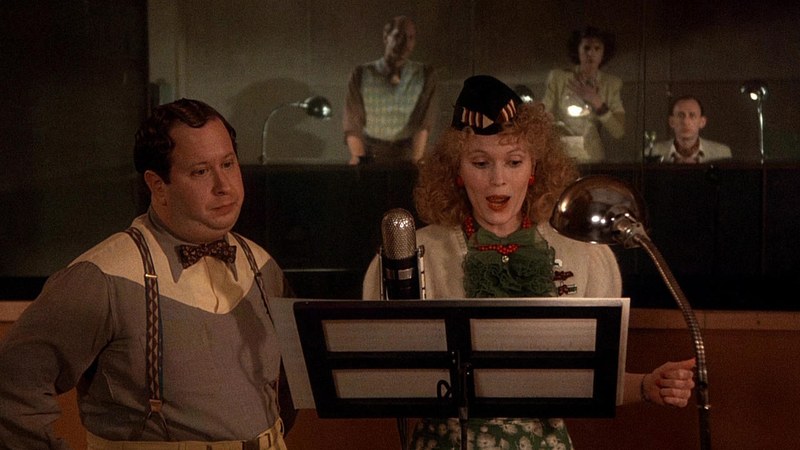
The first thing that stands out visually in “Radio Days” is Santo Loquasto’s excellent production design. Loquasto was another of Woody Allen’s regular collaborators during this period, following other strong designers such as Mel Bourne and Stuart Wurtzel, who had worked on Allen’s two previous films. Both in the carefully selected and treated real locations and in the studio interiors, there is an enormous attention to detail. It is clear that this was a very special project for the director and for everyone involved.
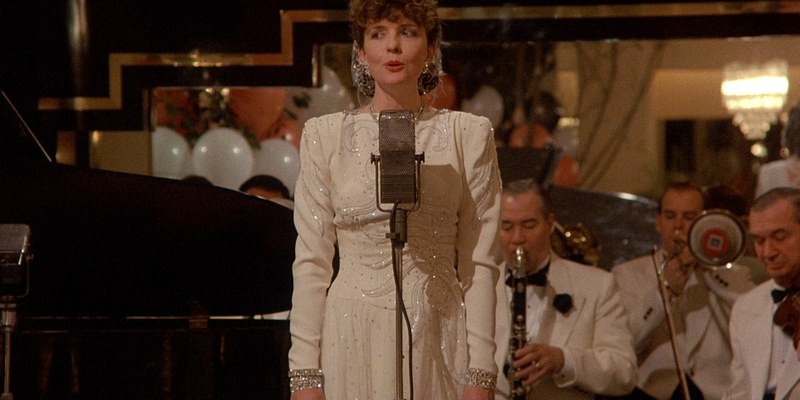
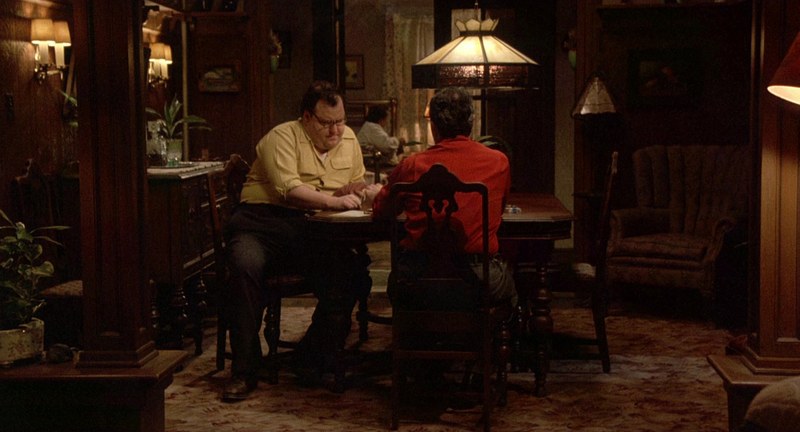
The Gordon Willis period had an enormous impact on Allen’s filmography. With Willis, Allen moved away from a more anarchic and fragmented approach to staging and into a cinema defined by control, sobriety and visual intelligence. Willis, of course, was the cinematographer of “The Godfather”. He generally did not like to move the camera, and those Allen films are characterized by superb static compositions in which the characters move inside the frame.
Di Palma was almost the opposite in that respect. He came from Antonioni’s cinema, and his visual instincts were very different from Willis’s. But in “Radio Days” the balance is especially interesting. There are tableau-like elements, as Willis would have called them, with very well-composed static shots. Yet the camera also follows the actors more often, accompanies them, or adjusts the frame through movement. It is not a showy or overtly virtuoso approach to staging, but it feels less controlled, freer and perhaps more spontaneous than Willis’s method.
Willis also preferred the purity and discipline of prime lenses. Di Palma, with the clear exception of the nighttime well sequence — full of flares and quite beautiful — seems to favor zooms for their flexibility. In “Radio Days”, there are moments in which the camera establishes one composition, an actor moves, and a carefully timed Cooke Varotal or Varopanchro zoom creates a second valid composition inside the same shot. Willis would never have worked that way. But it was probably faster, more economical in terms of shooting time and, most importantly for Allen, still effective.
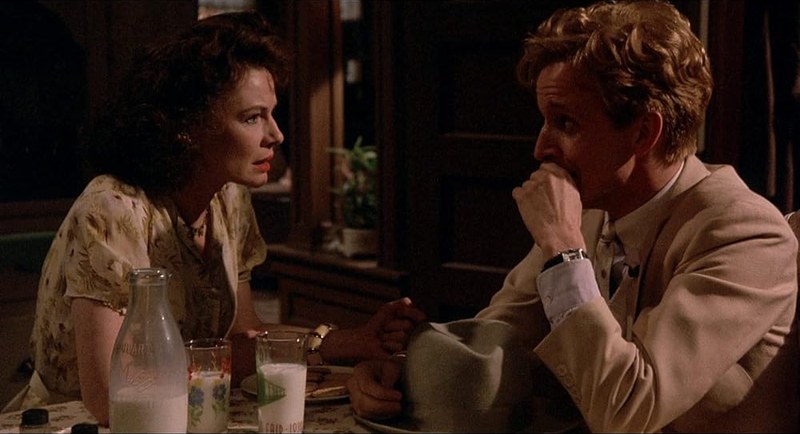
In terms of lighting, Di Palma does very good work, although the production design often carries the image more visibly than the lighting itself. The photography is somewhat hybrid in this regard, sitting between an older-school approach and more modern tendencies. There are many integrated practical sources, often overexposed, which give the impression of being the real sources of illumination. At the same time, Di Palma still uses a considerable amount of fill light and harder sources that are actually doing the main work on the actors and the sets.
Because “Radio Days” is a period film, generally gentle in tone and shaped by nostalgia, this approach is almost optimal in narrative and atmospheric terms. The same is true of Di Palma’s camerawork. It is more pragmatic than ostentatiously inspired, but it fits the needs of the film so precisely that it is difficult to object to it in any serious way.
Conclusion
“Radio Days” therefore shows Woody Allen in a more mature phase as a filmmaker, very well supported and complemented by new collaborators who, at least on this occasion, were able to make one temporarily forget the artists who had previously elevated his cinema to extraordinary heights.
ON FILM & DIGITAL
© Ignacio Aguilar, 2026.
This article is part of ON FILM & DIGITAL’s English-language cinematography reviews and essays.
The Author
Ignacio Aguilar is available for cinematography work, creative collaborations, lectures, workshops and international projects. He is a Sony Independent Certified Expert (ICE) and Cooke Optics Spanish Ambassador for Cooke SP3 lenses. Contact here.