

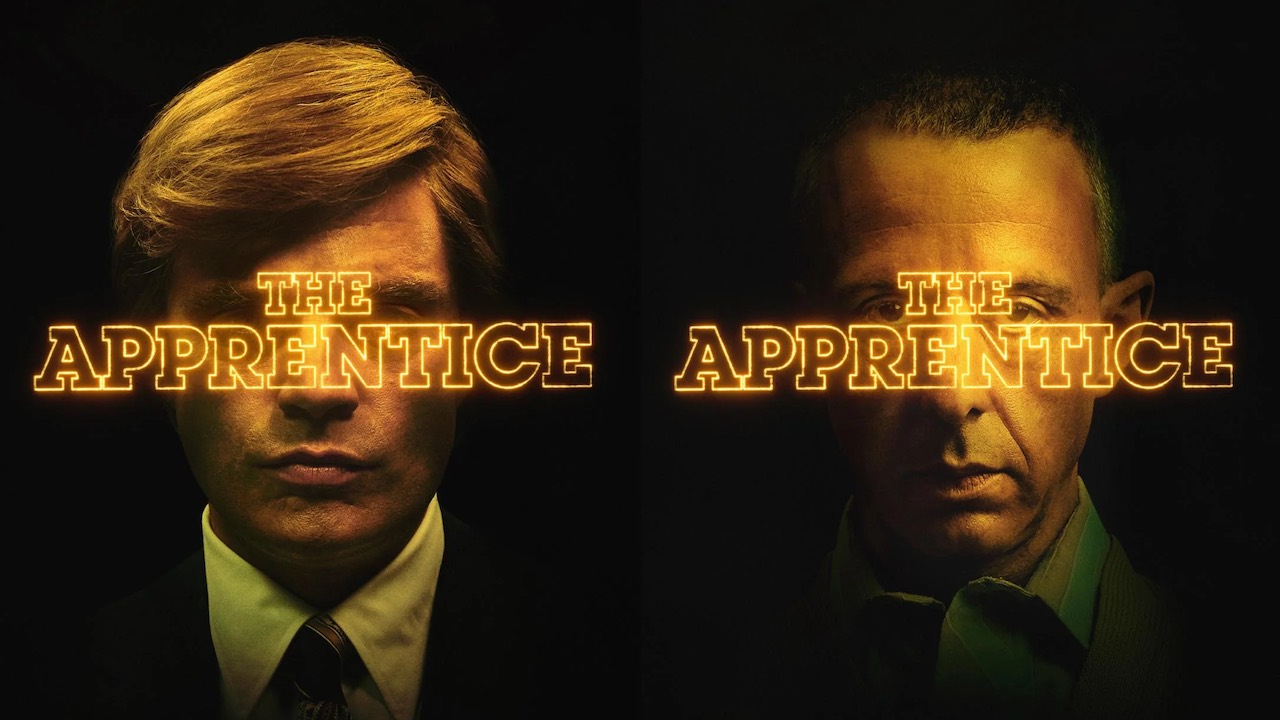
“The Apprentice”
Spanish Title: The Apprentice. La Historia de Trump
Year of Production: 2024
Director: Ali Abbasi
Director of Photography: Kasper Tuxen, DFF
Lenses: Zeiss T1.3 Super 16, Canon 8-64mm
Format and Aspect Ratio: ARRI Alexa 35, S16 crop, 1.50:1
Other: Digital Intermediate
Viewed on: Blu-ray
Kasper Tuxen uses the ARRI Alexa 35 in S16 crop mode to build a period image that moves from simulated 16mm grain to the more abrasive texture of 1980s video.
The Film
The Apprentice is an interesting portrait of Donald Trump, played by Sebastian Stan, set in New York during the 1970s and 1980s. The film follows the period in which Trump moved from being the son of Fred Trump, a successful real-estate developer played by Martin Donovan, to building and expanding his own public and business identity with the decisive guidance of Roy Cohn, the controversial lawyer played by Jeremy Strong.
That relationship explains the title. The film presents Trump as Cohn’s pupil, not only in business terms, but also in the formation of a public method: aggression, media visibility, denial and self-mythologizing. Through the press, real-estate spectacle and his marriage to Ivana Trump, the character gradually becomes a figure of national and eventually international celebrity culture.
Although the film was made and released before Trump’s second presidential term, it already carries the political shadow of a figure defined by more darkness than light. In the hands of Ali Abbasi, the Iranian-born, Danish-trained director of Border (2018), the result is a relatively light but consistently engaging chronicle. Its strongest elements are the performances by Sebastian Stan and Jeremy Strong, both of whom received Academy Award nominations for their work.
The Cinematographer
The cinematographer is Danish director of photography Kasper Tuxen, DFF. He is best known for his work with Joachim Trier on The Worst Person in the World (2021) and Sentimental Value (2025), both shot on 35mm film and characterized by a natural, direct and emotionally precise photographic approach.
Before The Apprentice, Tuxen had already worked in the United States with Gus Van Sant on The Sea of Trees (2015), starring Matthew McConaughey, Ken Watanabe and Naomi Watts. He had also photographed The Professor and the Madman (Farhad Safinia, 2019), with Mel Gibson and Sean Penn, as well as Anders Thomas Jensen’s Retfærdighedens ryttere (2020).
That background is relevant because The Apprentice is not photographed as a polished biographical drama. Tuxen approaches it more as an unstable period document, with a texture that changes as Trump’s public persona becomes harder, more media-aware and more artificial.
Visual Style Analysis
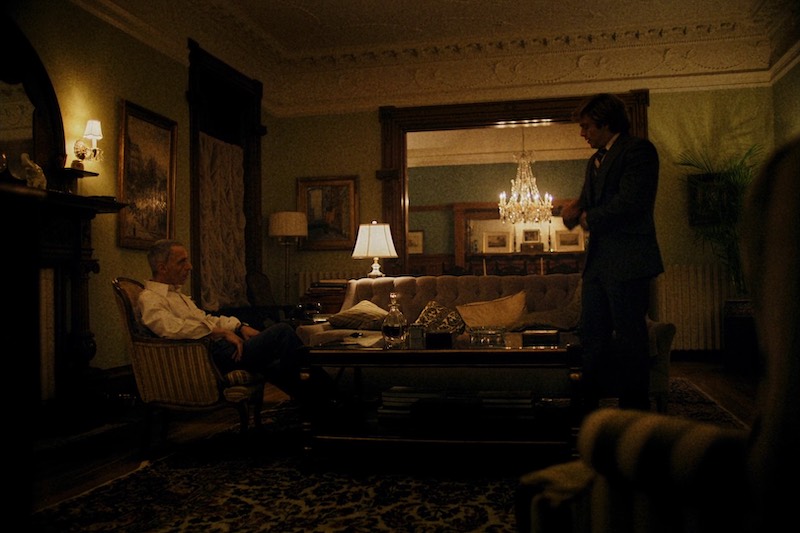
For The Apprentice, Abbasi and Tuxen created two clearly differentiated looks for the two decades covered by the film. The first section, roughly the first seventy minutes, corresponds to the 1970s and to Trump’s early stage as Fred Trump’s son. It is designed to resemble 16mm film, although the film was shot digitally.
To achieve that effect, the filmmakers used the ARRI Alexa 35 in S16 crop mode. At approximately 2K resolution, this mode uses only about a quarter of the camera’s sensor area. That reduction in captured detail makes the digital image softer and less clinically defined. It also allows the use of classic Super 16 lenses, mainly the Canon 8-64mm zoom, along with the Zeiss T1.3 Super 16 primes designed for that format.
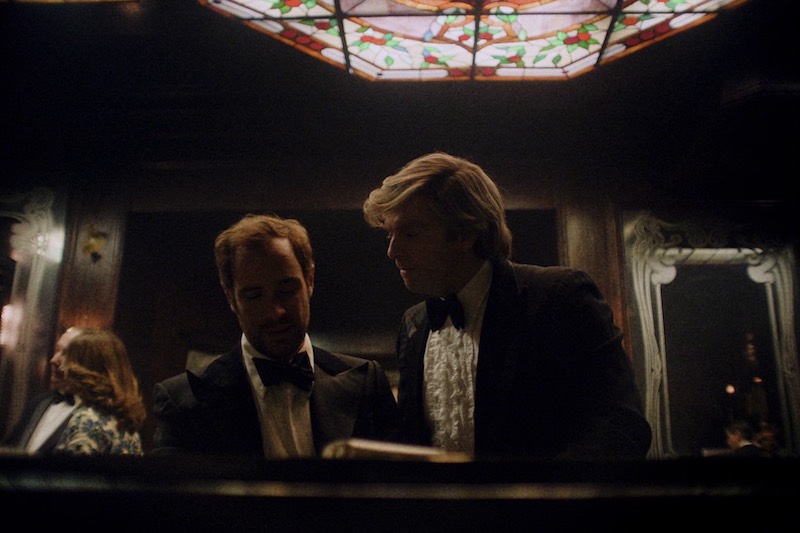
The second part of the process happens in the Digital Intermediate, where the image receives a strongly marked film texture, with heavy grain. The final fifty minutes, set in the 1980s, move toward the look of period television: videotape, broadcast texture and a more aggressive electronic image. The camera and lenses remain the same, but the image treatment changes the viewer’s perception of the material.
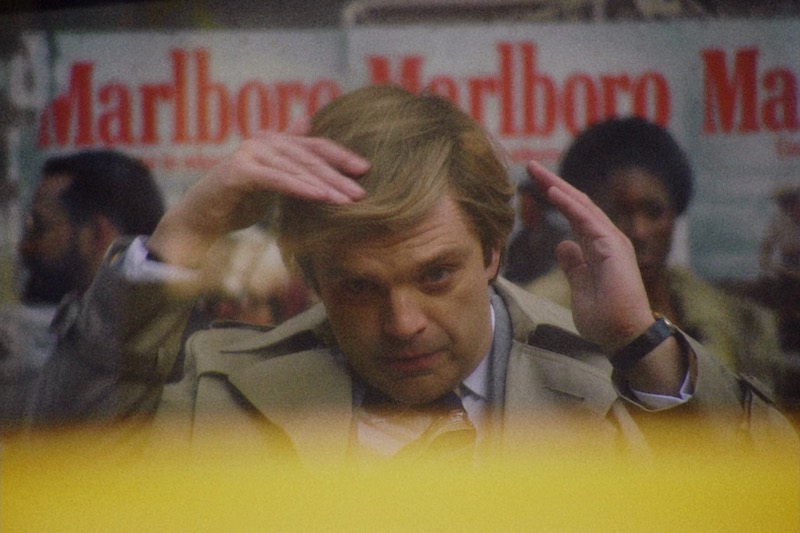
It is not surprising that Tuxen’s camera stays very close to Trump throughout the film. Much of the work is handheld or shoulder-mounted, often using wider focal lengths that introduce a degree of distortion. This brings the image closer to a documentary register, while the production design provides a convincing reconstruction of period interiors.
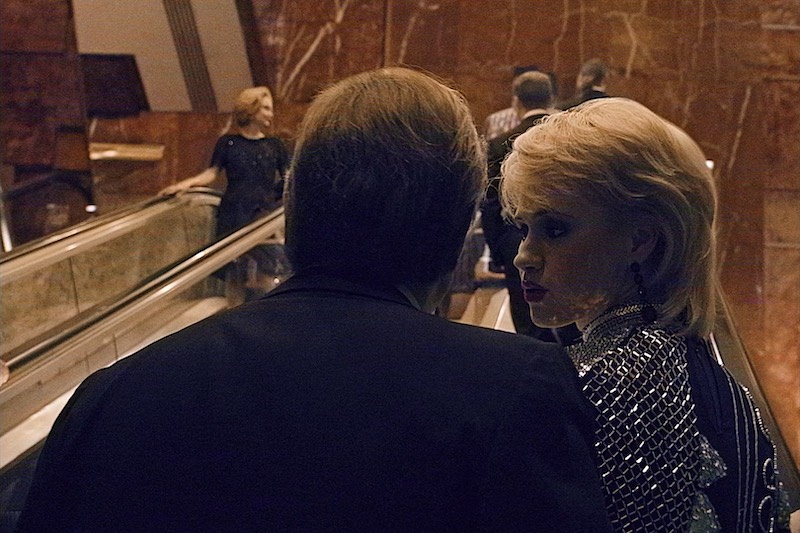
The lighting follows the same principle. It is less interested in perfecting the actors from the camera’s point of view than in recreating environments through the sources integrated into each space. Lamps, windows, office fixtures and practical light sources appear to define the scene before the actors are adjusted to them.
The exposures are not always clean, and that is part of the strategy. There are heavy shadows, but also highlights that become overexposed while remaining inside the latitude of the Alexa 35. In that sense, the camera is used to imitate one of the advantages of negative film: the ability to tolerate bright areas without immediately destroying the image.
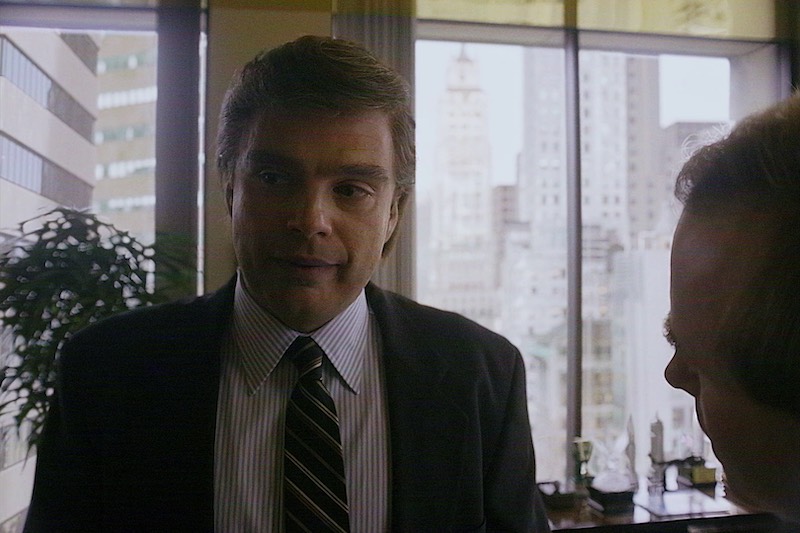
This approach is generally convincing, especially in the first part of the film. The Super 16 simulation is more successful and more pleasurable to watch. It has softness, grain and a degree of instability that feel appropriate to the period without becoming too distracting.
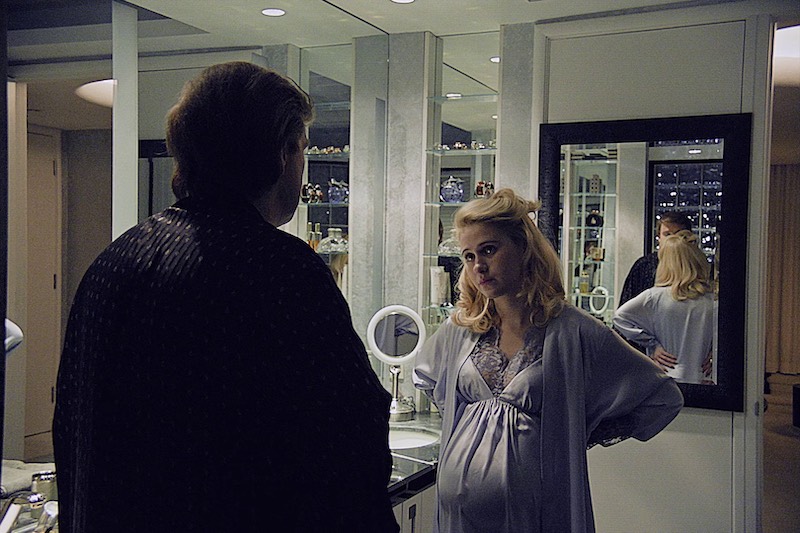
The video look of the 1980s section is more intrusive by design. The idea is sound, but the artifacts call more attention to themselves. Compared with the first half, the second half resembles early high-definition video as much as true 1980s broadcast footage. It has exaggerated definition, edge enhancement and visible color-compression problems. These elements are clearly intentional, but the resulting texture is still very different from actual 1980s video, and it carries far more resolution than the original material from that period would normally have.
Conclusion
The reason is understandable. A literal 1980s video image would probably not sustain a contemporary feature for such a long section, except as a brief device. Abbasi and Tuxen seem to choose a better, cleaner support and then degrade it toward a period video language rather than reproduce the actual technical limitations of the time.
That choice gives the film a clear conceptual structure: the 1970s belong to a simulated Super 16 texture, while the 1980s move toward a more mediated, television-shaped image. As an idea, it is coherent. As a viewing experience, it is not always equally successful.
The first half works better because the 16mm-inspired look supports the film without overwhelming it. The second half is more debatable. Its video artifacts are deliberately intrusive, but they sometimes pull attention away from a story and a pair of performances strong enough to stand without such visible formal insistence.
A more unified approach might have served the film better. A move from 16mm to 35mm with the change of decade, for example, could have preserved the period logic while keeping the image less self-conscious. Still, The Apprentice remains a visually intelligent piece of work. Its cinematography understands that the story is also about image construction: the making of a public figure through real estate, television, press and self-performance.
Viewed on: Blu-ray
ON FILM & DIGITAL
© Ignacio Aguilar, 2026.
This article is part of ON FILM & DIGITAL’s English-language cinematography reviews and essays.
The Author
Ignacio Aguilar is available for cinematography work, creative collaborations, lectures, workshops and international projects. He is a Sony Independent Certified Expert (ICE) and Cooke Optics Spanish Ambassador for Cooke SP3 lenses. Contact here.