

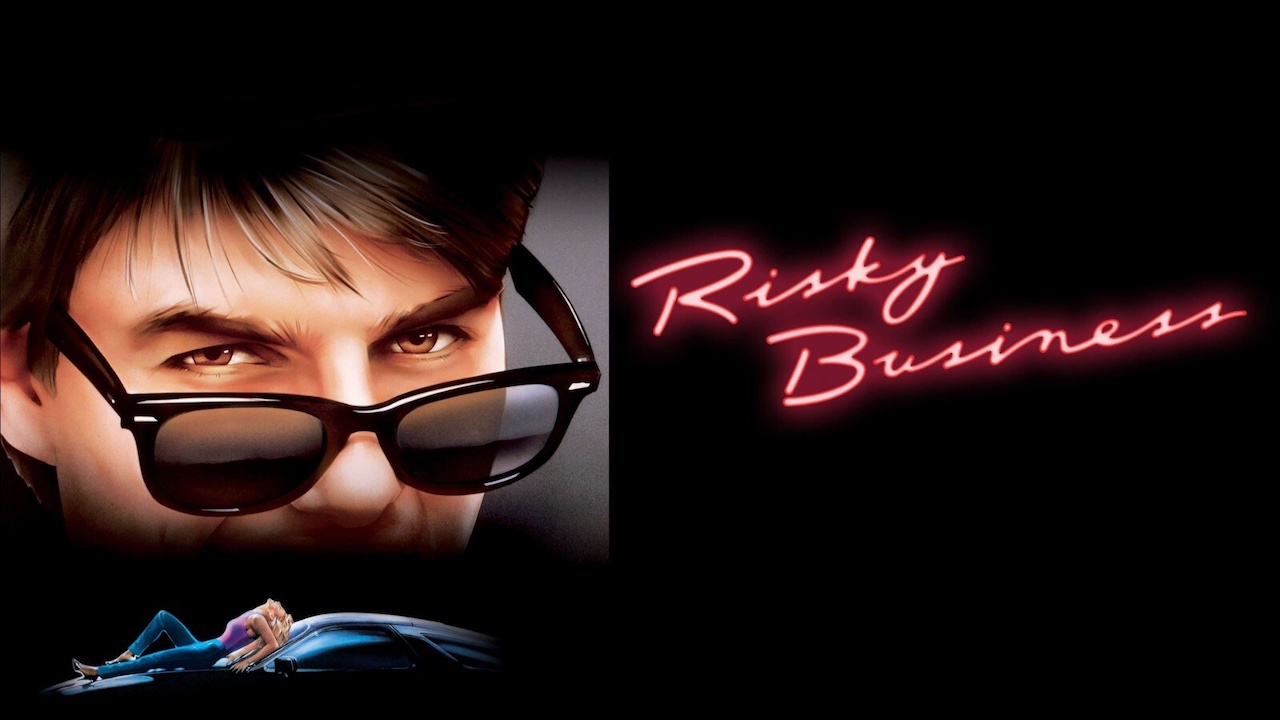
Risky Business (1983) – Cinematography by Reynaldo Villalobos and Bruce Surtees
«Risky Business»
Spanish Title: Risky Business
Year of Production: 1983
Director: Paul Brickman
Cinematography: Reynaldo Villalobos, Bruce Surtees, ASC
Lenses: Panavision Ultra Speed MKII
Film Stock: Kodak 5247 (125T), Kodak 5293 (250T)
Format and Aspect Ratio: 35mm spherical, 1.85:1
Viewed on Criterion 4K Blu-ray HDR
Often remembered as the film that launched Tom Cruise, «Risky Business» is also a darker, grainier and more carefully controlled piece of cinematography than its reputation suggests.
The Film
«Risky Business» was the feature debut of writer-director Paul Brickman, and the film that turned Tom Cruise into a star. Cruise plays Joel, a high-school senior preparing for the leap to college. His wealthy parents leave town for a few days, and Joel is left alone in the family house. Through a chain of accidents, he calls a young prostitute, Lana (Rebecca De Mornay), and his life begins to spin out of control, especially after his father’s Porsche ends up at the bottom of Lake Michigan.
The film asks the viewer to suspend disbelief, but it remains a very interesting variation on the coming-of-age drama. In some ways it sits close to the great «The Graduate» (Mike Nichols, 1967), although it is less far-reaching. What makes Brickman’s film work is the way it combines dreams, reality, desire and the uncertainty of early adulthood. All of that is concentrated in Cruise, who is very good here, particularly in the more open «Director’s Cut» released by Criterion. Nicholas Pryor, Richard Masur, Janet Carroll and Joe Pantoliano complete the cast.
The Cinematographers
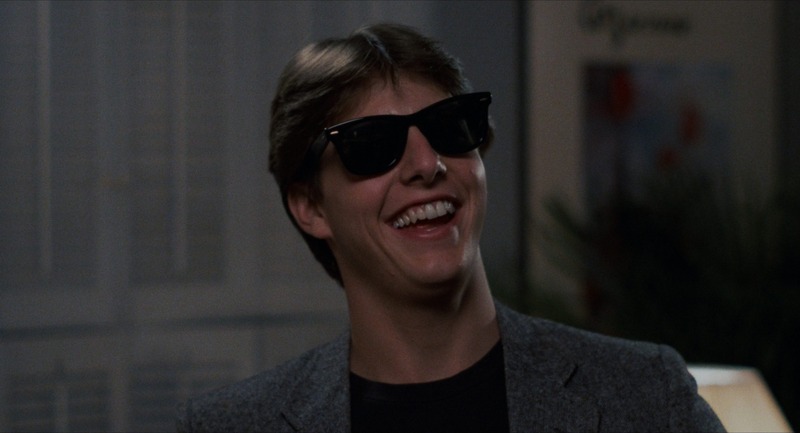
«Risky Business» had a complicated history from a cinematography standpoint. In a December 2025 piece for Chicago Magazine, Brickman and producer Jon Avnet explained that the film’s original director of photography was Peter Sova [ASC], later known for films such as «Diner», «Good Morning, Vietnam» and «Donnie Brasco». Sova, who died in 2020, was dismissed because his work did not satisfy the filmmakers.
Reynaldo Villalobos then took over the film. A former camera operator for John A. Alonzo, Villalobos was known for «9 to 5» (Colin Higgins, 1980), «Urban Cowboy» (James Bridges, 1980), «Blame It on Rio» (Stanley Donen, 1984) and «A Bronx Tale» (Robert De Niro, 1993). He would also photograph the first season of «Breaking Bad» (2008), after his friend John Toll shot the pilot.
Villalobos also had to leave the production, in his case because of previous commitments. The final third of the shoot was completed by Bruce Surtees, ASC, the longtime Malpaso cinematographer. Surtees had photographed many Clint Eastwood films, including «The Beguiled» (1971), «High Plains Drifter» (1972), «The Outlaw Josey Wales» (1976), «Escape from Alcatraz» (1979) and, finally for Eastwood, «Pale Rider» (1985).
Visual Style Analysis
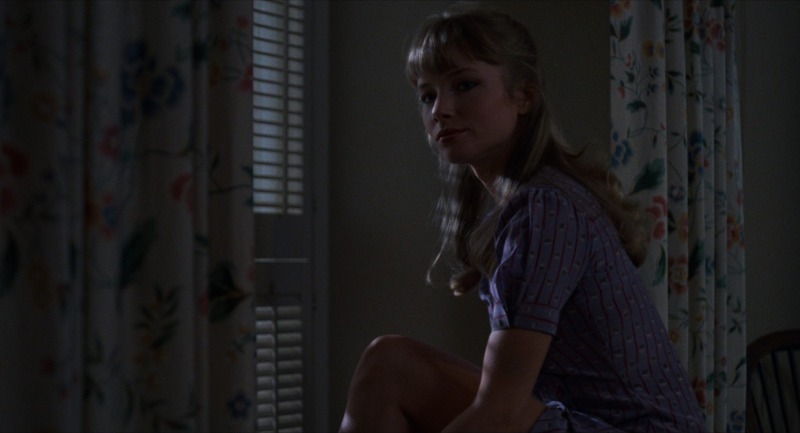
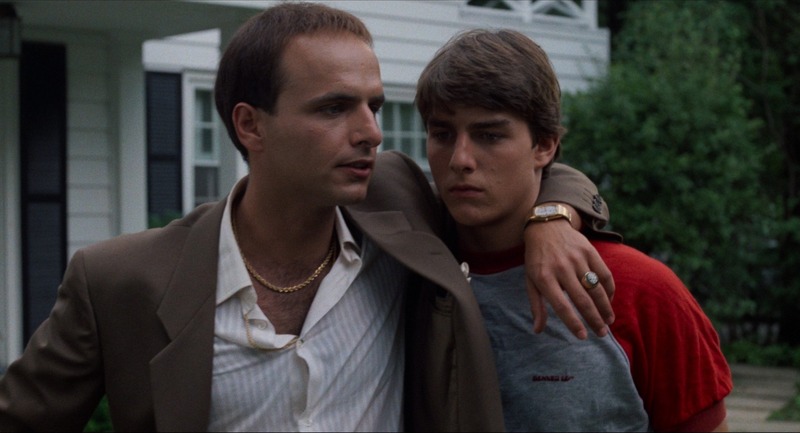
Despite the use of three cinematographers, the image of «Risky Business» feels remarkably unified. Little, if anything, of Peter Sova’s original approach seems to remain on screen. The filmmakers described it as too Hollywood. The finished film moves in another direction: darker, softer, grainier and closer to 1970s adult drama than to most early-1980s commercial teen comedy. That connection also makes sense in relation to Villalobos’s background with John A. Alonzo.
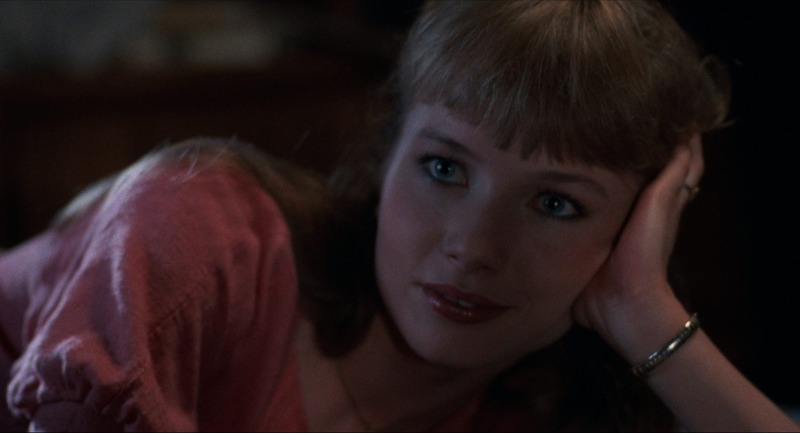
The film’s adult tone is carried by a low-key photographic style that Villalobos appears to have established. Surtees, of course, was extremely comfortable in that territory. His own work often pushed darkness and underexposure toward something more experimental, which is why, like Gordon Willis, he was sometimes associated with the nickname «The Prince of Darkness». In «Risky Business», however, it is difficult to isolate the final third shot by Surtees. The stronger impression is that he worked very seriously to preserve the tone set by Villalobos, a tone close to his own instincts but slightly more accessible.
From Brickman and Avnet’s comments, it seems reasonable to assume that Villalobos photographed the interiors of Joel’s house. The night exteriors feel very much like Surtees, at least in terms of style. Everything outside those two areas remains harder to assign with certainty. In any case, the cinematography is notable because it fixes the unstable tone of Joel’s dreams and waking life with real precision. His first encounter with Lana, when the window opens wide, is one of the film’s best visual moments.
The spherical Panavision lenses are used very wide throughout the film, and probably wide open in the night exteriors. This allows the production to work with extremely low light levels for the period. The night scenes are minimal, built from a few practical sources, soft overhead ambience and occasional harder accents.
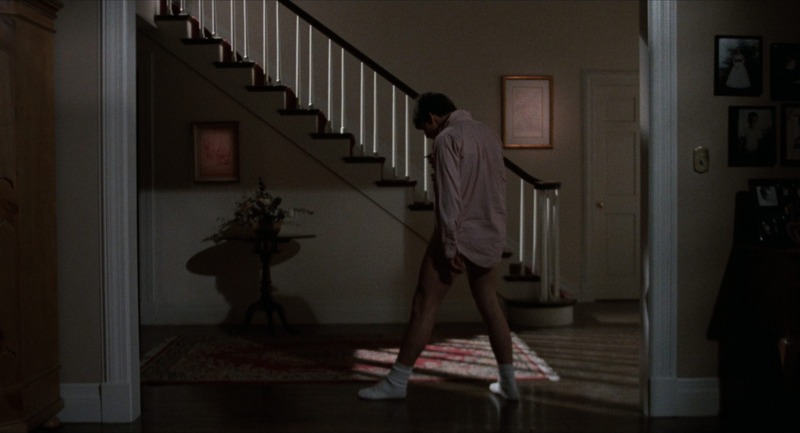
In the exterior night work, beyond some blue reinforcement in the backgrounds, Surtees and Villalobos make a clear effort to use the light of Chicago itself. Because of its location and nocturnal atmosphere, the work occasionally recalls Donald Thorin’s cinematography in «Thief» (Michael Mann, 1981). Shooting so open, the light levels must have been extremely low for the time. Judging by its texture, «Risky Business» was one of the early films to use Kodak’s high-speed 5293, a 250T negative stock already available when the film was shot in 1982.
5293 was not an easy stock, but here the tight exposures produce an interesting grain structure that adds realism to the image. The cleaner daytime exteriors appear to have been shot on the classic Kodak 5247, 125T. Criterion’s 4K Blu-ray renders the photochemical texture beautifully, although some optical effects and even the blue-screen work near the end look softer and less refined because those sections do not come from the original camera negative.
Conclusion
The cinematography is effective not because it constantly calls attention to itself, but because Villalobos established a darker, lower-level photographic approach that goes well beyond the spicy teen comedies of the period. This is a more adult film than its surface suggests, and the photography, completed with great care by Surtees, reinforces that idea rather than simplifying it.
There are some focus issues, especially in the pier sequence with the Porsche, and a few moments in which the lighting now feels dated. Villalobos often liked to put light in the actors’ eyes, and one front-facing shot inside the car, with Cruise and one of his friends, stands out because its harder source does not quite belong to the rest of the film’s visual logic.
Even so, the work is mature enough to remain very stimulating. It also leaves an interesting question around Paul Brickman’s career. He directed only one more feature, «Men Don’t Leave» (1990), again photographed by Surtees. After the success of «Risky Business», it is tempting to wonder what might have happened if Brickman had continued making this kind of adult, visually controlled cinema, even within a more independent production context.
Viewed on Criterion 4K Blu-ray HDR
ON FILM & DIGITAL
© Ignacio Aguilar, 2026.
This article is part of ON FILM & DIGITAL’s English-language cinematography reviews and essays.
These texts are not plot summaries or general film reviews, but cinematography-focused essays written from the perspective of a working cinematographer.
The Author
Ignacio Aguilar, AEC is a cinematographer based in Madrid, Spain. He is available for cinematography work, creative collaborations, lectures, workshops and international projects. He is a Sony Independent Certified Expert (ICE) and Cooke Optics Spanish Ambassador for Cooke SP3 lenses.