

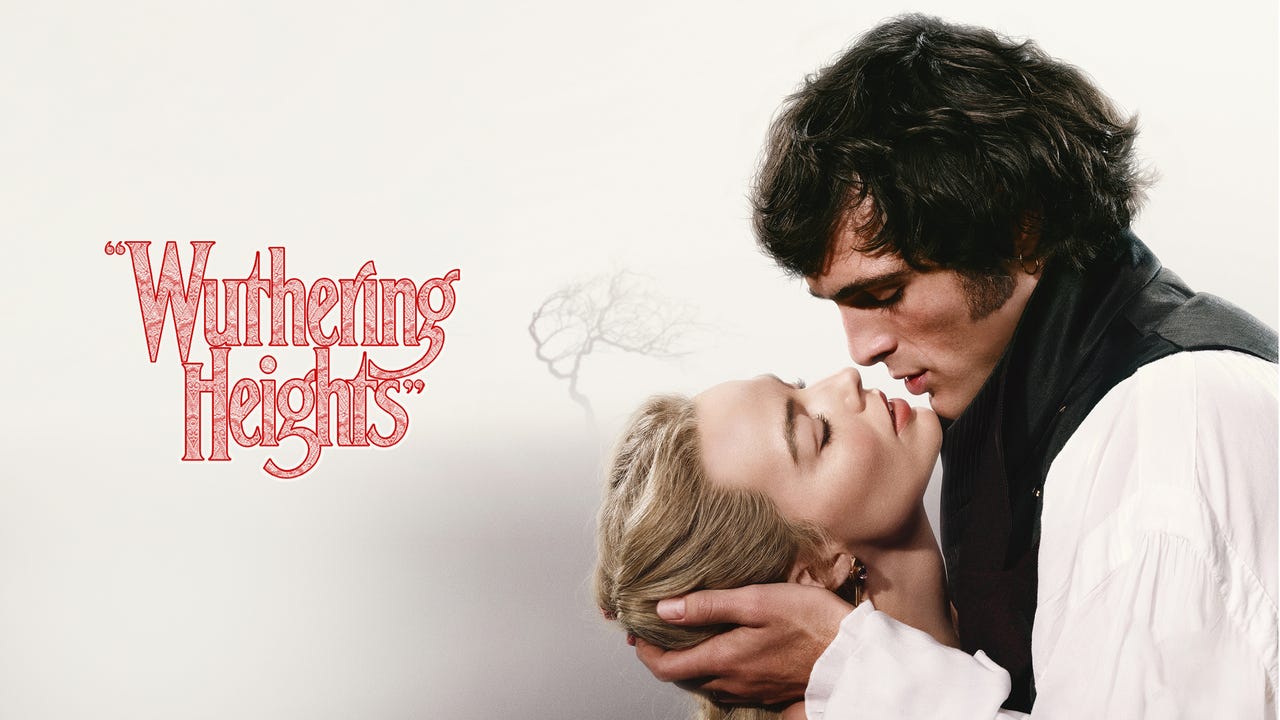
“Wuthering Heights”
Spanish Title: Cumbres Borrascosas
Year of Production: 2026
Director: Emerald Fennell
Director of Photography: Linus Sandgren, ASC, FSF
Lenses: Panavision Primo (Super 35)
Film Stock: Kodak 5213 200T, Kodak 5219 500T
Format and Aspect Ratio: 3-perf Super 35 + VistaVision, 1.85:1
Other: 4K Digital Intermediate
Viewed on: 4K HDTV
Linus Sandgren brings Kodak film, Super 35, VistaVision and highly theatrical lighting to Emerald Fennell’s gothic romance.
The Film
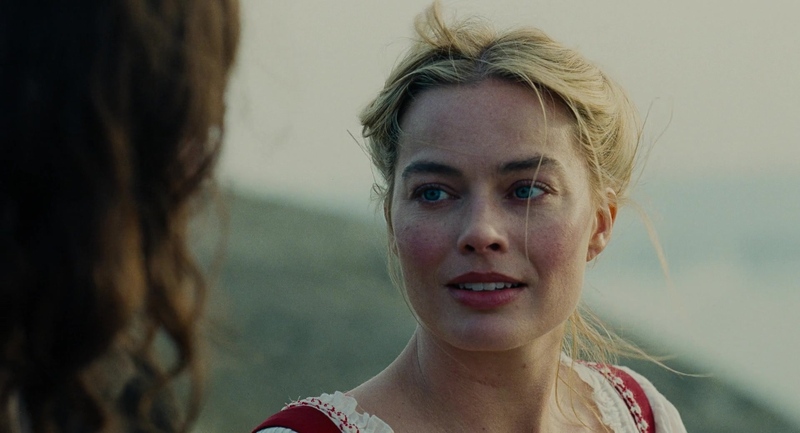
Wuthering Heights is an adaptation of Emily Brontë’s classic novel, written, produced and directed here by Emerald Fennell, the filmmaker behind Promising Young Woman (2020) and Saltburn (2023). Set in the nineteenth century, the film centers on Cathy, played by Margot Robbie, the daughter of a declining landowner.
The man she truly desires is Heathcliff, played by Jacob Elordi. He was taken in by her father as an orphaned child, and from that moment the two became inseparable. As adults, however, misunderstandings and emotional misjudgments drive Heathcliff away, with catastrophic consequences.
This version of Wuthering Heights is clearly conceived as a period film for a contemporary audience, and probably a younger one. That is visible not only in the casting of two stars with strong commercial appeal, whose physical presence is very deliberately used by the mise-en-scène, but also in the film’s uninhibited treatment of female desire and in a soundtrack shaped by songs and a sensibility that are fully contemporary.
The result is uneven. It is a romantic drama that feels too long and does not generate enough chemistry between its two central characters. Because of that, several strong visual and staging ideas never quite become as effective as they might have been.
The Cinematographer
The cinematographer is Swedish director of photography Linus Sandgren, ASC, FSF, who had already photographed Saltburn, Emerald Fennell’s previous feature. He is also known for his work with David O. Russell on American Hustle (2013) and Joy (2015), and for his collaboration with Damien Chazelle, which brought him the Academy Award for Best Cinematography for La La Land (2016).
Sandgren also photographed First Man (2018) and Babylon (2022) for Chazelle. His name is now one of the most prominent in the industry. At the time of this article, he also has Dune 3 (Denis Villeneuve, 2026) awaiting release, shot in 65mm and IMAX. His filmography also includes Promised Land (Gus Van Sant, 2012), No Time to Die (Cary Joji Fukunaga, 2021) and Don’t Look Up (Adam McKay, 2021).
Visual Style Analysis
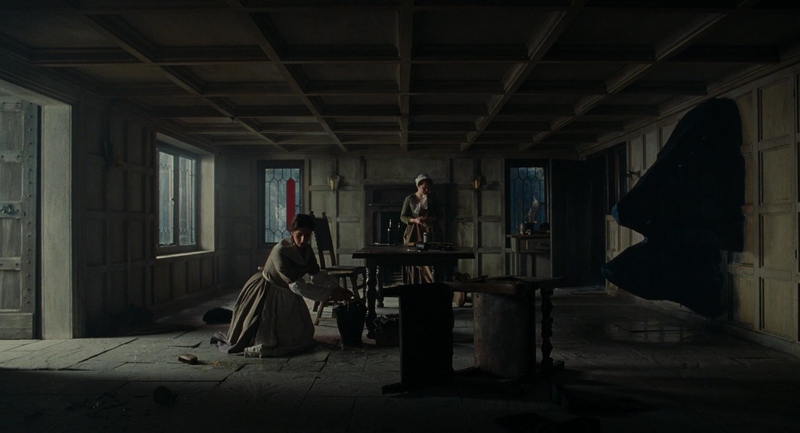
Wuthering Heights combines real locations for the large exterior landscapes with a substantial amount of studio work. What is striking is that the stages are not used only for interiors, as one might expect. The immediate exteriors around the houses and villas in the film were also built and photographed indoors.
Linus Sandgren has described the idea as making the exteriors feel like a stage and the stage feel like a real exterior. Whether or not that distinction is ultimately decisive, the result is a stylized and generally theatrical film, even if Sandgren himself often describes his work in naturalistic terms.
In practical terms, this film has much more in common with the colorful, highly self-conscious personality of Saltburn — both films also share production designer Suzie Davies — than with the period-interior work of John Alcott on Barry Lyndon or Greystoke, or David Watkin’s lighting in films such as The Charge of the Light Brigade and Chariots of Fire.
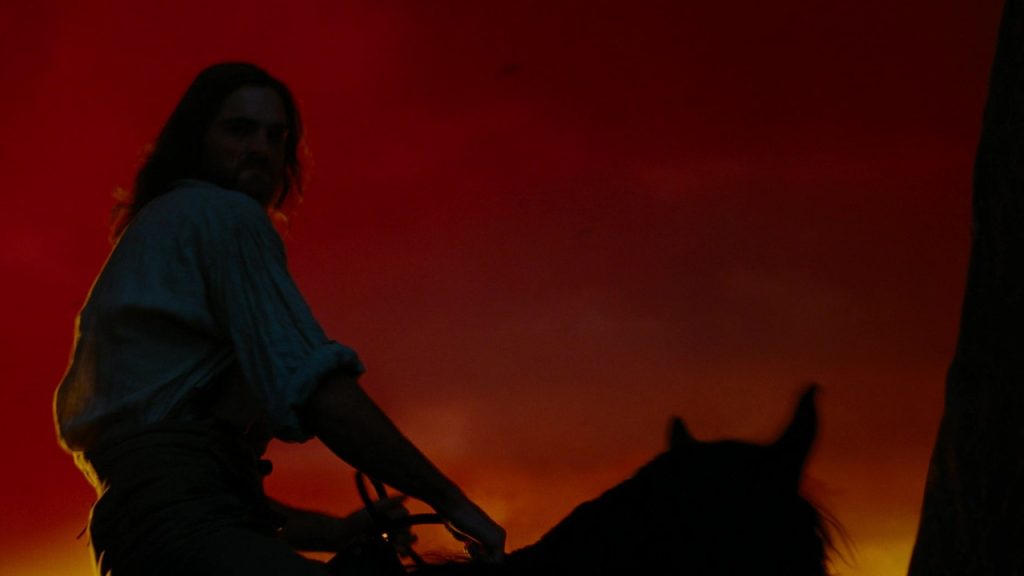
At times, the backdrops are extremely dramatic, with color effects and cloud formations that call attention to themselves. One can imagine that Fennell was searching for a kind of romance closer to the heightened emotional sweep of Gone with the Wind (Victor Fleming, 1939) than to strict period realism.
On a technical level, the film is interesting. Sandgren is becoming one of the strongest contemporary defenders of photochemical capture, and Wuthering Heights is no exception. The film was primarily shot in 3-perf Super 35 on Kodak 5213 200T and Kodak 5219 500T, with strong overexposure — around one stop, at least in scenes with sufficient light level.
As in Saltburn, the lenses are Panavision Primo. Unlike that film, however, which was composed for 1.33:1, Wuthering Heights uses a 1.85:1 aspect ratio. That wider frame favors broader compositions and stronger separation between characters. Some specific shots, not clearly identified in detail, were photographed in VistaVision with a Beaumont camera, although the lenses used for those shots have not been widely specified.
Those VistaVision shots are probably the wider real exterior views and some of the more expansive stage compositions, where the filmmakers may have wanted greater detail and richness. On 4K HDTV, however, the difference is not especially perceptible.
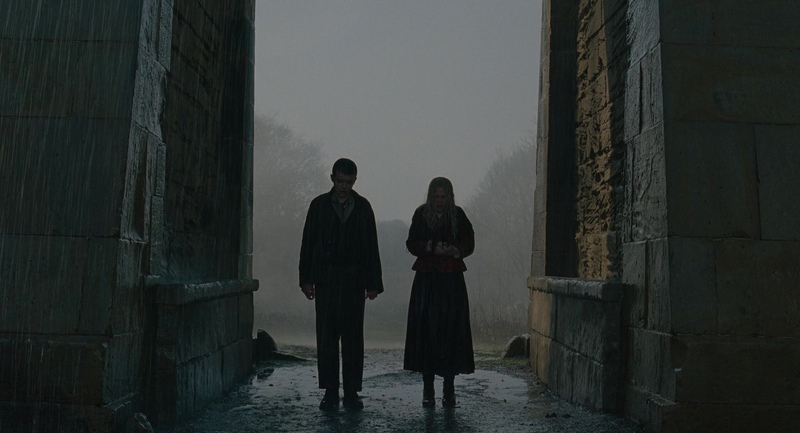
The stage exteriors have a certain artificial quality, but they are executed well enough that the spectator does not necessarily question their studio origin. The interiors are perhaps more striking, because they offer many different lighting situations. Some are more naturalistic, as if soft light were entering through the windows. Others are much more dramatic, with shafts of direct sunlight produced with tungsten Fresnels, high or very high contrast, smoke and deep blacks.
At certain moments, this approach recalls the 1980s stylization of Peter Hyams, for example in The Star Chamber (1983), especially in the combination of hard light, atmosphere and dark negative space.
Color is also used narratively. In Cathy’s house, which becomes increasingly decadent, the light tends to move toward blue. In Edgar’s house, the reds are much more stylized. Sandgren’s night work also feels theatrical, at times closer to genre cinema than to a conventional romantic drama. Some of these scenes are very blue, dark and contrasty, often organized around backlight.
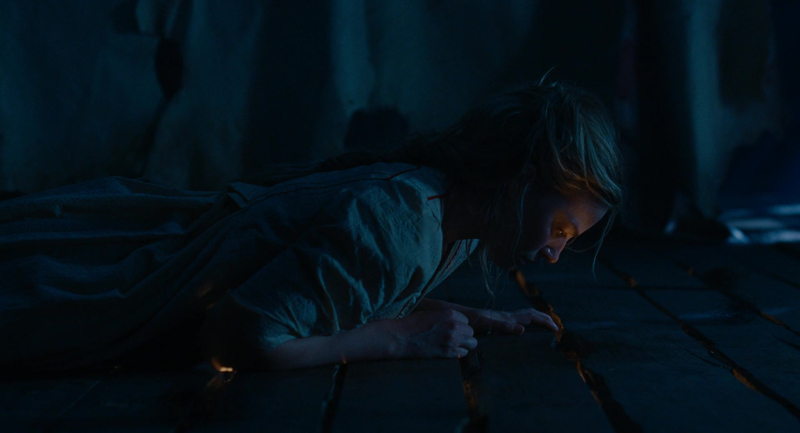
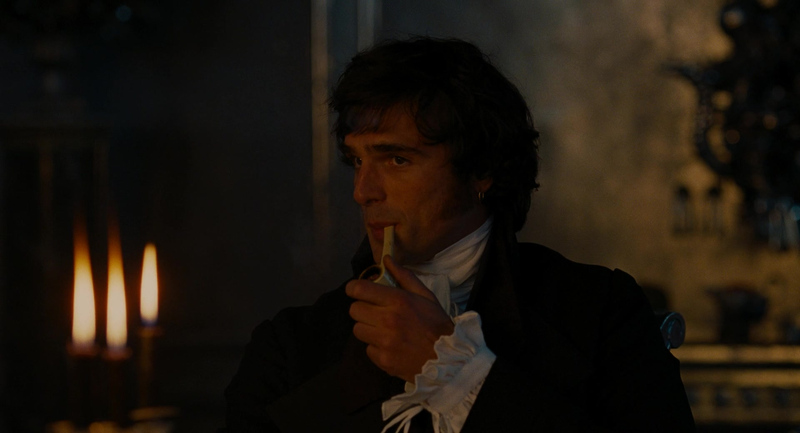
In the interiors, as in Saltburn, that blue exterior presence is often felt. But Sandgren generally tries to use real candles as a source of illumination, supplementing them with off-camera candles and some very softened sources.
Conclusion
The overall look is very strong. The problem is that the film does not fully work on a dramatic level, and for that reason much of what the light and camera try to communicate does not completely land. There are many strong and interesting moments, but they often seem driven more by aesthetic intention than by narrative force.
Some images do serve a precise purpose, especially in the first third of the film, where the camera, light and even sound suggest Cathy’s sexual desire. There is a clear attempt to make the filmmaking carry meaning. The difficulty is that the final effect can feel somewhat hollow.
That is also evident in many of the film’s more “epic” exteriors, and in a central sequence built around a song that comes very close to music-video language. Wuthering Heights, therefore, is, like Saltburn, more style than substance. In my view, Promising Young Woman, which was not a perfect film either, remains Emerald Fennell’s strongest work.
Viewed on: 4K HDTV
ON FILM & DIGITAL
© Ignacio Aguilar, 2026.
This article is part of ON FILM & DIGITAL’s English-language cinematography reviews and essays.
The Author
Ignacio Aguilar is available for cinematography work, creative collaborations, lectures, workshops and international projects. He is a Sony Independent Certified Expert (ICE) and Cooke Optics Spanish Ambassador for Cooke SP3 lenses. Contact here.