

“The New World”
Spanish Title: El Nuevo Mundo
Year of Production: 2005
Director: Terrence Malick
Director of Photography: Emmanuel Lubezki, ASC, AMC
Lenses: Panavision C Series and E Series anamorphic lenses, modified for close focus
Film Stock: Kodak VISION2 5217 200T and 5218 500T
Format and Aspect Ratio: 35mm anamorphic (Panavision) + 5-perf 65mm (Panavision Super 70, selected shots), 2.40:1
Other: 2K Digital Intermediate for reducing and integrating the 65mm material into 35mm anamorphic; primarily photochemical finish. 4K digital restoration of the 172-minute Extended Cut
Awards: Academy Award nomination for Best Cinematography
Viewed on: 35mm print and Blu-ray
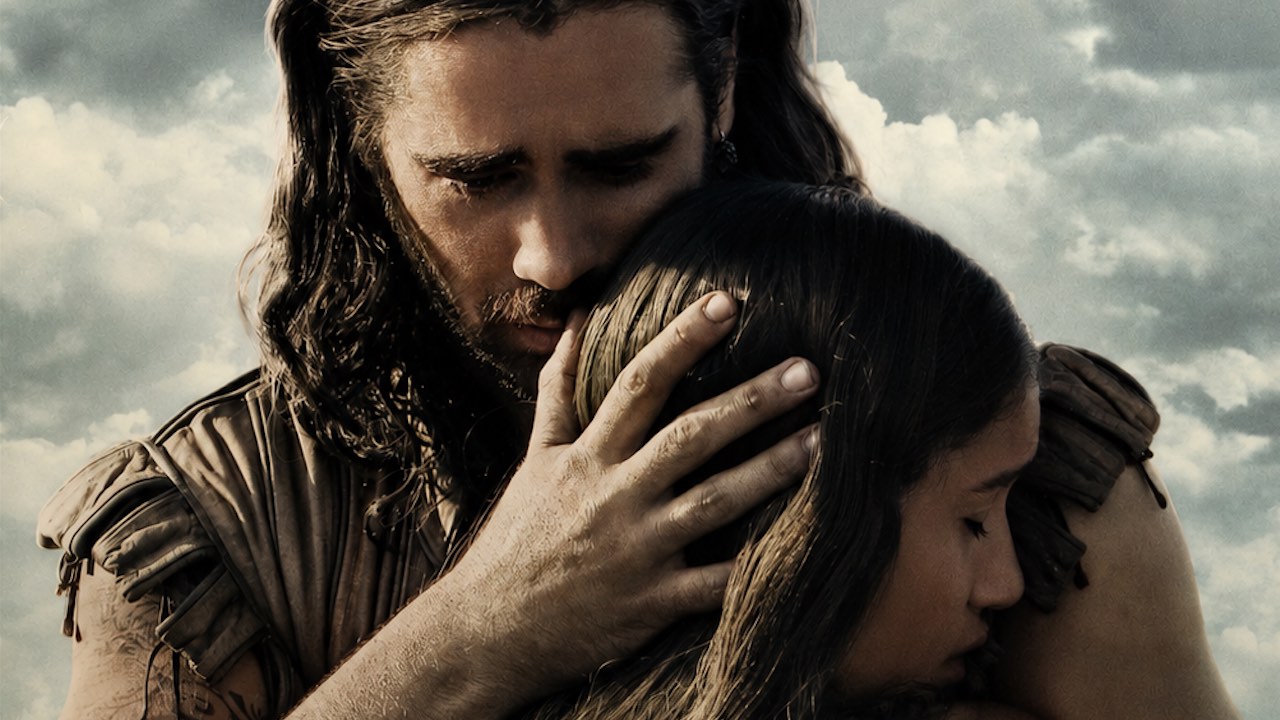
In “The New World,” Emmanuel Lubezki, ASC, AMC pushes 2x anamorphic photography toward close focus, deep stops and available light, reshaping the format for Terrence Malick.
The Film
The New World was Terrence Malick’s fourth feature, released seven years after The Thin Red Line (1998), which had itself marked his return to filmmaking twenty years after Days of Heaven (1978). Here, Malick turns to the arrival of the English on the Virginia coast in the early seventeenth century. The film moves through several clearly defined points of view. It begins with John Smith (Colin Farrell), who enters the territory and meets the daughter of Chief Powhatan (Q’orianka Kilcher). She then takes over as the central consciousness until she meets John Rolfe (Christian Bale), whose perspective closes the story when they travel to England. Malick addresses purity and spiritual corruption, the encounter between civilizations, freedom and love through a film that is lyrical, formally open and highly experimental, though less secure at the level of conventional narrative. For me, the 135-minute theatrical cut is the most complete version: more dramatically focused, with each scene advancing the characters and their relationships. In that form, it is one of the major films of the 2000s.
A 150-minute First Cut and a 172-minute Extended Cut also survive. The longest version contains extraordinary passages, but it also lingers through extended stretches of interior monologue in which the drama barely progresses. In the 135-minute cut, the cinematography serves the narrative. In the 172-minute version, there are moments when the narrative begins to serve the cinematography and the sensory experience instead. The result is considerably more dilated and closer to the looser, more ruminative mode of later Malick films such as To the Wonder (2012), which I find less successful. Christopher Plummer, David Thewlis, Wes Studi and John Savage are among the supporting cast.
The Cinematographer
The cinematographer was Emmanuel Lubezki, ASC, AMC. At the time, he was still associated as much with highly controlled artificial lighting — in films such as A Little Princess (Alfonso Cuarón, 1995) and Sleepy Hollow (Tim Burton, 1999), both of which earned him Academy Award nominations — as with the natural-light approach that would later define much of his reputation. He had also photographed Ali (Michael Mann, 2001), while Y tu mamá también (Alfonso Cuarón, 2001) had already shown him moving toward a looser and more responsive use of available light. Even so, his selection was not the most obvious one on paper. Néstor Almendros had won the Oscar for Days of Heaven, while John Toll had received both an Academy Award nomination and the ASC Award for The Thin Red Line, in competition with Saving Private Ryan (Steven Spielberg, 1998). The standard established by Malick’s previous films was unusually high.
Lubezki’s success on The New World helped establish him as one of the central cinematographers of the last three decades. He followed it with Children of Men (Cuarón, 2006) and later returned to Malick for The Tree of Life (2011). Three consecutive Academy Awards then followed: Gravity (Cuarón, 2013), Birdman (Alejandro G. Iñárritu, 2014) and The Revenant (Iñárritu, 2015). Since then, he has worked in feature films only intermittently. His next film, Iñárritu’s Digger, is scheduled for release on October 2, 2026.
Visual Style Analysis
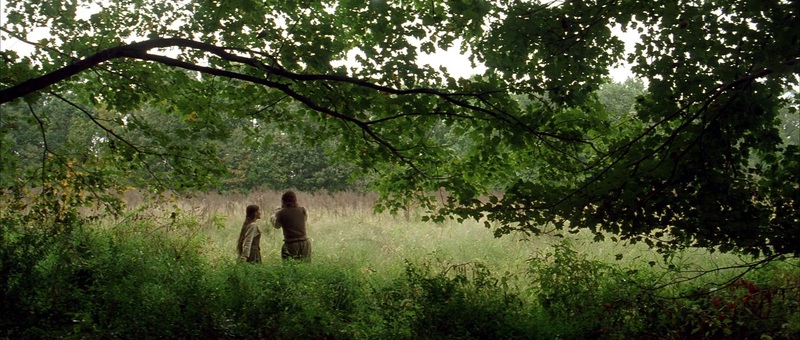
For The New World, a large-scale production conceived with the freedom of an art film, Malick and Lubezki established a set of visual rules. They would shoot into backlight whenever possible, maintain substantial depth of field, favor subjective points of view, work only with Steadicam or handheld camera, avoid cranes and use no artificial lighting. Lubezki later acknowledged that every one of those rules was broken at some point, but the finished film still follows the system with remarkable consistency. The cinematographer clearly had to adapt to Malick, a director who, in Néstor Almendros’ view, understood photography well enough to have photographed his own films. It is therefore not entirely surprising that The New World remains Lubezki’s second and, so far, last feature photographed in 2x anamorphic, after Great Expectations (Cuarón, 1998).
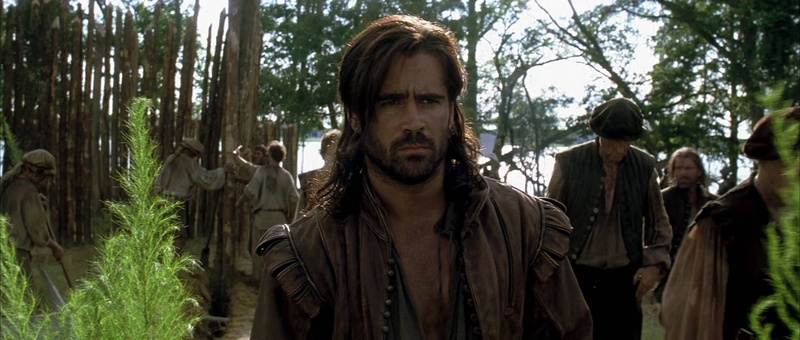
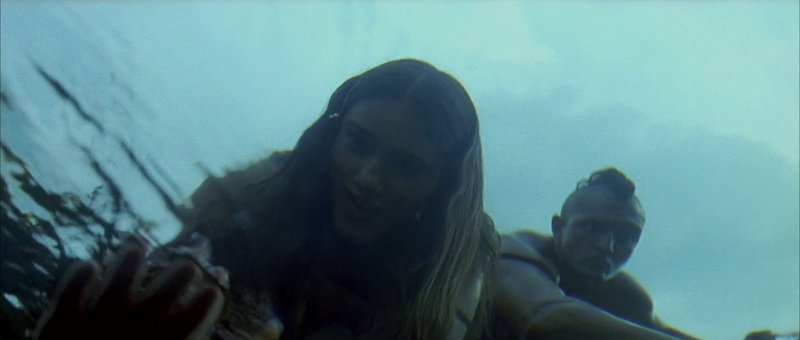
John Toll had photographed The Thin Red Line with Panavision Primo Anamorphics, but Lubezki’s experience with those lenses on Great Expectations had been difficult. For The New World, Dan Sasaki modified C- and E-Series lenses to focus closer, particularly the 40mm and 50mm focal lengths. That decision became fundamental to the film’s staging. The anamorphic lenses are often placed unusually close to the actors, sometimes to a degree that feels almost unfamiliar for the format. Many older anamorphics cannot focus closer than approximately one meter. Judging from the finished film, the front of the lens sometimes appears to be only about 65–80 centimeters from the performers.
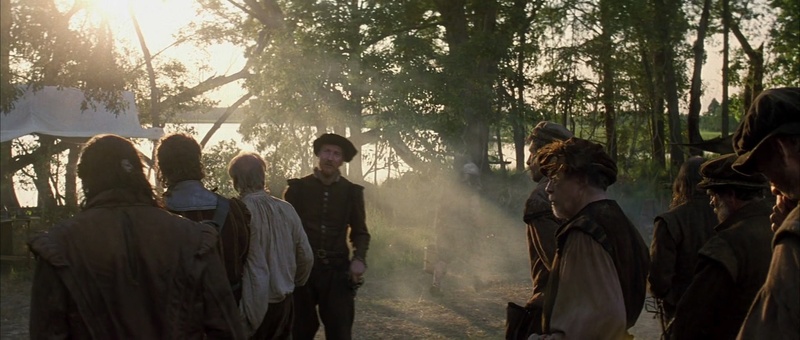
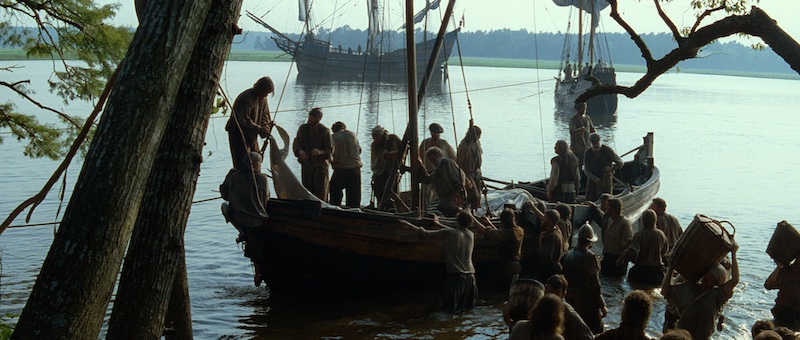
Malick and Lubezki also wanted extensive depth of field, another difficult demand in 2x anamorphic. At a comparable horizontal field of view, anamorphic photography generally requires substantially more stop than spherical photography to achieve similar depth. A result resembling T/2.8 in spherical may require something close to T/5.6 in anamorphic. Lubezki pushed the method much further, frequently working at T/11 or T/16 while keeping the lenses close to the actors. The combination is highly unusual and runs against many of the conventions associated with vintage anamorphic photography. Although the film is built largely around daylight exteriors, the crew often had to work under overcast skies or beneath trees. Lubezki therefore chose Kodak VISION2 5217 200T and 5218 500T. Compared with the cleaner, more dimensional rendering of The Thin Red Line — shot on EXR 5248 100T with Primo Anamorphics — The New World uses more imperfect lenses and a somewhat grainier negative package. Malick and Lubezki may have sought a counterweight by photographing selected passages — roughly half a dozen, according to Lubezki — in 65mm. Those moments are either brief or normalized so effectively in the finish that the difference was difficult to detect even in 35mm theatrical prints.
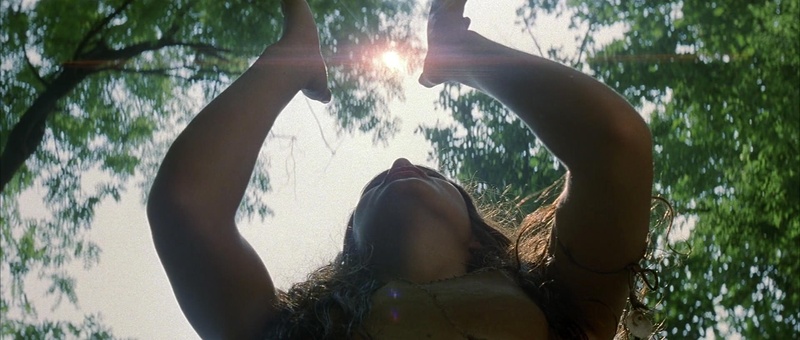
Lubezki’s greatest achievement, however, was not simply solving the technical problems created by those choices. It was working within Malick’s self-imposed discipline of using almost no artificial light. The idea is immediately attractive, but it runs against a cinematographer’s instinct to use every available tool to protect the image. Lubezki was already capable of producing extremely refined lighting, yet here he had to resist that control in favor of something more direct and responsive. He later joked that the lighting truck had to be kept out of Malick’s sight. At one point he called John Toll, who advised him to trust the director. The anecdote is revealing: the difficulty was not a lack of technique, but the decision not to deploy technique in its most visible form.
Backlight became the practical answer. It also created a kind of automatic continuity: if the dominant direction is consistently behind the actors, material shot at different times can still belong to the same visual system. Lubezki exposes the backlit faces carefully and allows the backgrounds to rise toward a much higher exposure. Clouds frequently become pale, thin or partially burned out. That was not a problem for Malick, who was not interested in conventionally blue skies. Many of the widest shots show almost no visible intervention beyond choosing the direction of view and, perhaps, using overhead diffusion or negative fill near the camera. This was not the Days of Heaven method of waiting almost exclusively for magic hour. The scale and schedule appear to have required the filmmakers to work across a much broader range of daylight conditions.
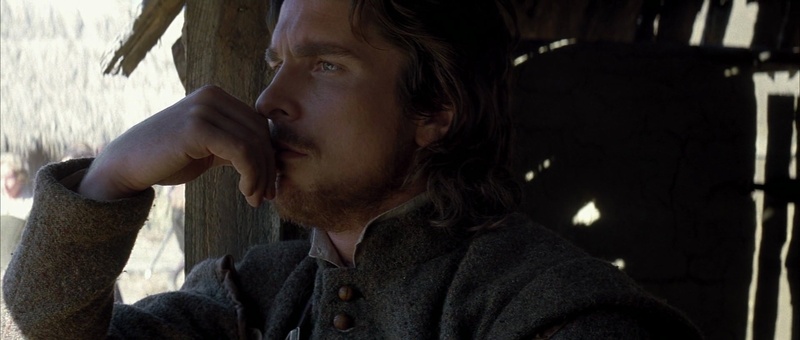
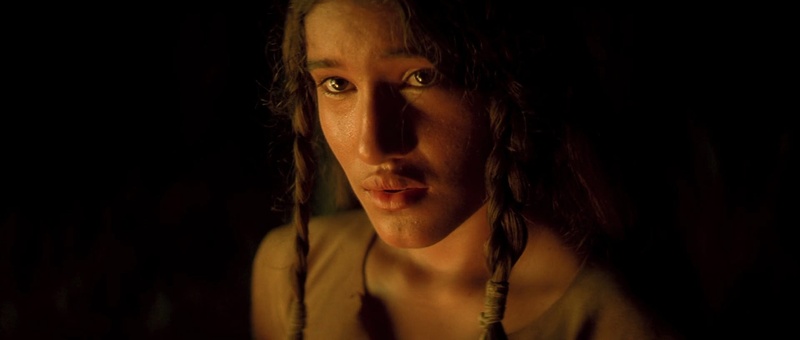
The visual evidence suggests a practical distribution of locations and times of day: wooded material could absorb harder midday conditions, while open landscapes were better suited to morning or late afternoon. The film also moves through dawns, twilights, torchlight and firelight, all handled with remarkable consistency. The most substantial intervention may occur during the royal reception in England, or earlier when Smith is brought before Powhatan, where strong overhead shafts can feel too concentrated to come entirely from available sunlight. Even the huts and cabins are treated with extreme simplicity, often producing a soft, north-light quality. The close-ups reveal a little more shaping. There are signs of a small bounce on the side of the face away from camera, together with negative fill close to the lens. That extra control may have restricted movement slightly, but it gives the faces greater emotional clarity. In the medium and wider coverage, there is often little or no obvious shaping at all.
Conclusion
The concept was risky. The film depends on self-imposed restrictions, frequent use of 40mm and 50mm anamorphic lenses, very deep stops and minimal intervention from the cinematographer. Yet the result is both natural and technically distinctive. The period feels physically credible because the photochemical image combines the definition of 35mm negative — used for most of the film — with the gentler rendering of older Panavision anamorphics. Malick’s decision to finish the picture photochemically was understandable at a time when Digital Intermediates could still introduce obvious limitations. The 65mm material, however, was reduced and integrated into the 35mm anamorphic release through a 2K Digital Intermediate, which may help explain why it rarely separated itself from the rest of the film.
The best available edition is Criterion’s Blu-ray. The 172-minute Extended Cut received a new 4K digital restoration supervised by Emmanuel Lubezki and Terrence Malick, while the 135- and 150-minute versions derive from high-definition transfers supervised by Lubezki. All three are presented in 1920 × 1080 SDR. A future HDR presentation could be revealing, especially in a film built around elevated highlights and strong overexposure, provided that it preserved the density and tonal relationships of the intended photochemical image.
The American Society of Cinematographers did not nominate Lubezki for The New World, a surprising omission at the time. The film’s only Academy Award nomination — for its cinematography — restored some balance. The Thin Red Line may still stand above it in scale, variety and expressive range, and its staging is arguably more ambitious. But Malick and Lubezki had not yet reached the fullest expression of their collaboration. That arrived six years later with The Tree of Life (2011).
ON FILM & DIGITAL
© Ignacio Aguilar, 2026.
This article is part of ON FILM & DIGITAL’s English-language cinematography reviews and essays.
These texts are not plot summaries or general film reviews, but cinematography-focused essays written from the perspective of a working cinematographer.
The Author
Ignacio Aguilar, AEC is a cinematographer / director of photography based in Madrid, Spain. His work spans feature films, television, commercials and technical writing on cinematography, with experience in digital cinema, 16mm and 35mm film, anamorphic lenses, large-format digital capture, lens testing and film-based workflows.
He is a member of the Spanish Society of Cinematographers (AEC) and the Spanish Academy of Cinema, a Sony I.C.E. Certified Expert and a Cooke SP3 ambassador. His writing has appeared in American Cinematographer and Camera & Light, and ON FILM & DIGITAL gathers his bilingual essays, technical guides and cinematography reviews.
For professional work, collaborations, lectures, workshops or cinematography consulting, visit his professional biography, selected works or contact page.