

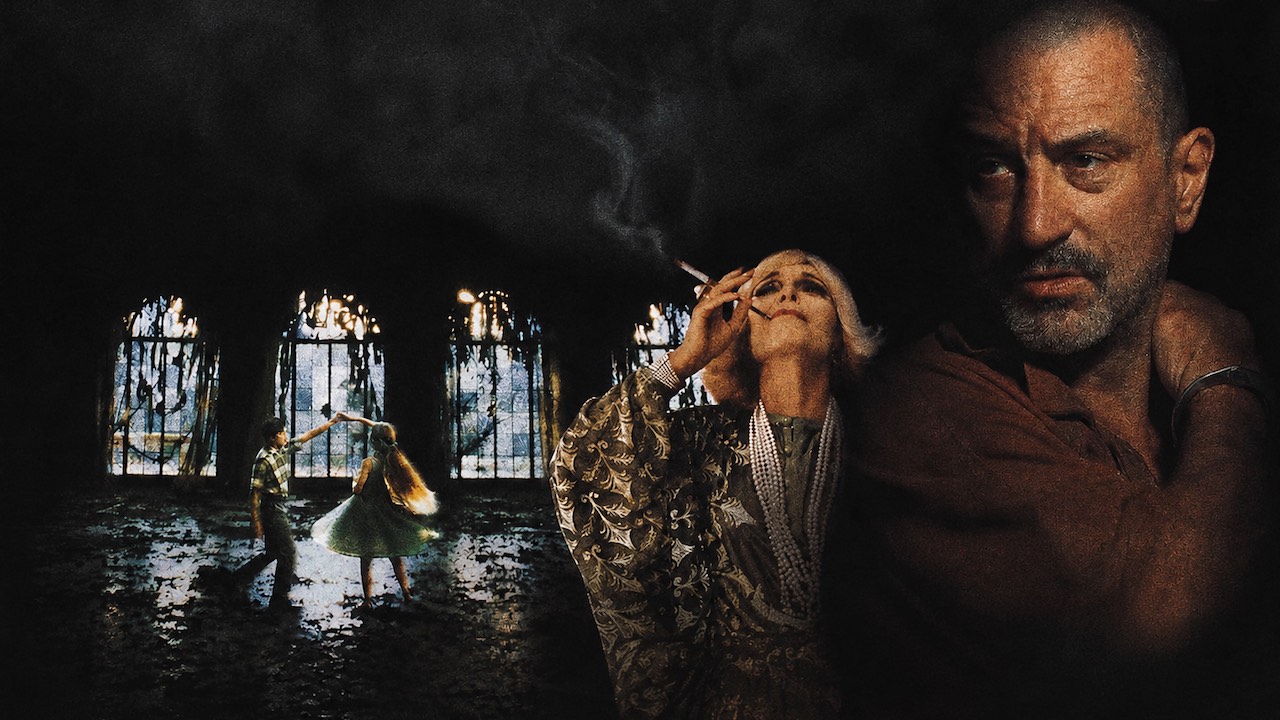
Great Expectations (1998) – Cinematography by Emmanuel Lubezki, ASC, AMC
“Great Expectations”
Spanish Title: Grandes Esperanzas
Year of Production: 1998
Director: Alfonso Cuarón
Director of Photography: Emmanuel Lubezki, ASC, AMC
Lenses: Panavision Primo Anamorphic, C Series and E Series
Film Stock: Kodak
Format and Aspect Ratio: 35mm anamorphic (Panavision), 2.40:1
Laboratory Process: Deluxe ACE partial silver-retention process
Viewed on: Blu-ray
In “Great Expectations,” Emmanuel Lubezki’s first anamorphic feature, soft light, hard backlight and conspicuous pictorial control become both part of the film’s attraction and part of its tension.
The Film
Alfonso Cuarón’s Great Expectations is a contemporary reworking of the Charles Dickens novel. It follows Finn (Ethan Hawke), who as a boy meets and falls in love with Estella (Gwyneth Paltrow) at the mysterious Florida home of Ms. Dinsmoor (Anne Bancroft). Years later, an anonymous benefactor gives Finn the opportunity to exhibit his drawings and paintings at a prestigious New York gallery, bringing him back into Estella’s orbit.
With Robert De Niro, Chris Cooper and Hank Azaria in supporting roles, Great Expectations remains one of Cuarón’s less personal and less fully realized films. He was working from someone else’s screenplay on a large studio production, at some distance from the creative freedom of his strongest work. Several passages are effective — the childhood opening, Finn and Estella’s reunion in New York, and the scenes with De Niro — but the film often feels truncated and loosely assembled. Its separate movements do not fully cohere. Cuarón would later speak about the experience in unusually critical terms, and his return to Mexico for Y tu mamá también (2001) can be understood partly as an attempt to recover a more personal way of filmmaking. The ingredients are substantial; the finished film does not consistently bring them together.
The Cinematographer
The cinematographer was Emmanuel Lubezki, ASC, AMC. Still only 31 when the film was made, he had already received an Academy Award nomination for his previous collaboration with Cuarón, A Little Princess (1995). He was also known for photographing the Mexican material in Like Water for Chocolate (Alfonso Arau, 1992), as well as Reality Bites (Ben Stiller, 1994) and A Walk in the Clouds (Arau, 1995).
Major directors were already seeking him out: Mike Nichols for The Birdcage (1996), Martin Brest for Meet Joe Black (1998), and Michael Mann for Ali (2001). It was an exceptionally rapid ascent, but the defining phase of his career was still ahead. After Sleepy Hollow (Tim Burton, 1999), he began his landmark collaboration with Terrence Malick on The New World (2005), The Tree of Life (2011), To the Wonder (2012), Knight of Cups (2015) and Song to Song (2016).
Back with Cuarón, Lubezki delivered one of his finest achievements in Children of Men (2006), before winning three consecutive Academy Awards for Gravity (Cuarón, 2013), Birdman (Alejandro G. Iñárritu, 2014) and The Revenant (Iñárritu, 2015). Since then, he has photographed features only intermittently, with Amsterdam (David O. Russell, 2022), the Cuarón miniseries Disclaimer (2024), photographed with Bruno Delbonnel, and Iñárritu’s Digger, scheduled for release on October 2, 2026.
Visual Style Analysis
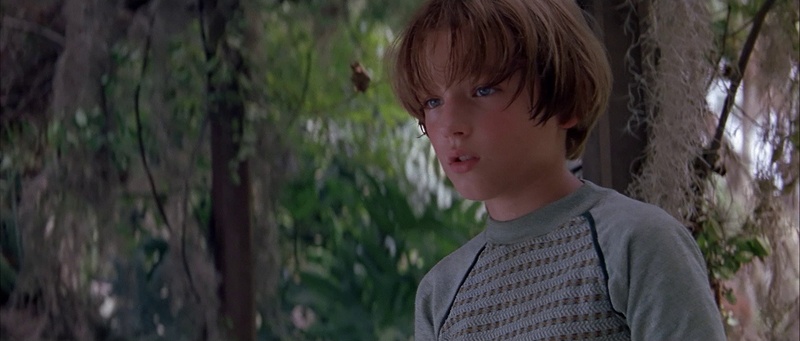
Great Expectations is unusual not only within Cuarón’s filmography, but also within Lubezki’s. It was his first feature photographed in anamorphic widescreen, a format he would use only once more, on The New World (2005). In Contemporary Cinematographers on Their Art, Lubezki described the difficulties he encountered, particularly with Panavision Primo Anamorphics. The Primos may have offered the cleanest image in the package, but they were also exceptionally large and heavy — some weighing six or seven kilograms — which made the kind of mobile, physically close camera work he and Cuarón wanted much harder to achieve.
Once production was underway, Lubezki shifted toward the smaller and lighter C- and E-Series lenses, especially the C Series. The E Series, designed in the 1980s, was generally larger and optically more controlled than the C Series, which dated back to the late 1960s. Whatever the precise balance within the package, the change makes Great Expectations a particularly revealing Lubezki film. Most of his career would be built around spherical photography; here, the mechanics and optical behavior of 2x anamorphic actively shaped the camera language.
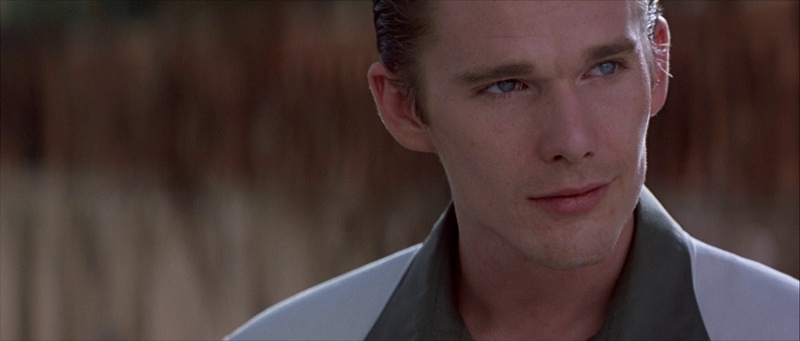
At this stage of his career, Lubezki’s style was openly pictorial and already showed an unusual command of artificial light. That is worth stressing because, after Y tu mamá también and especially his work with Malick, he became widely identified with available light and naturalism. In the mid-1990s, however, he was equally striking for a sophisticated lighting style that many cinematographers take much longer to develop.
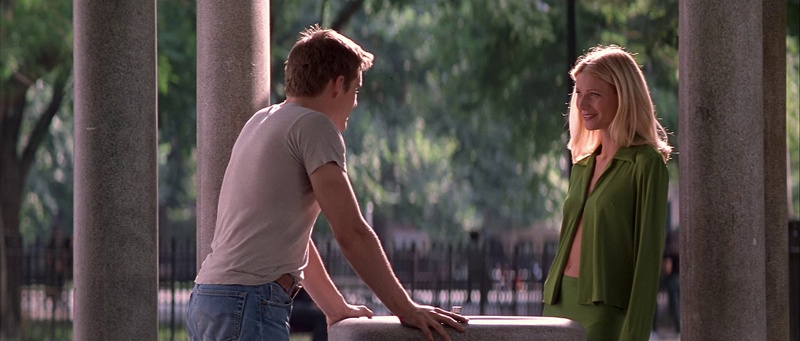
From the childhood sequences onward, the lighting is designed to present the actors with great care. Lubezki repeatedly places a strong source behind them, then returns part of that light to the faces. In some shots, the quality suggests silver reflectors, giving the skin an almost luminous or slightly metallic sheen.
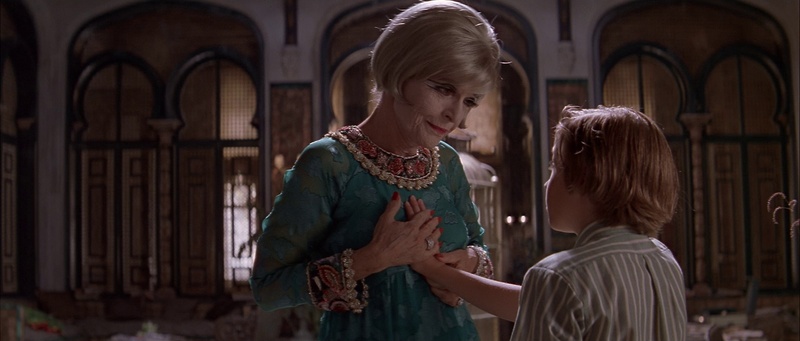
This is especially clear in the early scenes with the young Finn. Elsewhere, the return appears softer, probably coming from white reflectors, beadboard, or book-light arrangements: a large source diffused through fabric after being bounced into a white surface. The faces remain extremely soft throughout the film. That softness, set against intense shafts and backlights, is one of the defining characteristics of the photography.
Lubezki also uses a device associated with José Luis Alcaine’s Mediterranean sensibility. Powerful sources, often placed very high, strike the floor or ground rather than the actors directly. The surface then becomes the source, lifting the faces from below with a broad, indirect return. It is a simple principle, but here it contributes greatly to the film’s polished, almost tactile treatment of skin.
In the laboratory, Lubezki used Deluxe’s ACE process, an adjustable silver-retention treatment distinct from a full bleach bypass. It increased contrast and black density without suppressing color as aggressively as the conventional process. The choice may also have compensated for some of the softness, veiling flare and reduced contrast of the older anamorphic lenses, restoring density and separation at the end of the photochemical workflow.
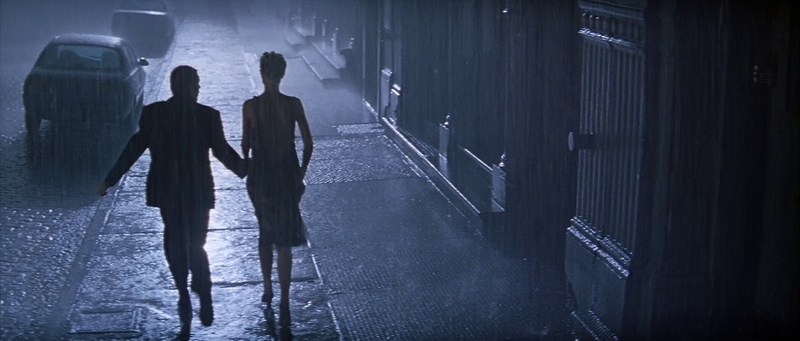
Overall, the cinematography is more aestheticized than naturalistic. Lubezki makes strong use of available light and overexposure, but almost always pushes both toward a heightened result. The film consistently feels lit. That is part of its appeal: nearly every location and performer is rendered beautifully. It also means that the photography remains highly visible as a layer of authorship.
The New York locations offer the clearest example. Very large backlights give the images scale, atmosphere and separation, but they also keep the lighting unmistakably artificial. The same principle shapes the early night scenes with Robert De Niro, where backlight organizes almost every angle. That degree of intervention serves Ethan Hawke and Gwyneth Paltrow extremely well; both are photographed with unusual care. Lubezki also uses controlled underexposure on faces turned toward practical sources, and occasionally lets figures fall into silhouette, as in the Central Park tunnel.
Cuarón and Lubezki would later become closely associated with extended, fluid camera movement and, at times, highly responsive handheld work. Great Expectations already contains the former, but almost none of the latter. The anamorphic package — particularly the size of the Primo lenses — seems to have pushed the production toward cranes, lateral tracking shots and more formalized movement.
The staging is undeniably elaborate. At times, however, the movement becomes more demonstrative than dramatic, especially in some of the crane work, where the camera accelerates or changes direction with a slightly abrupt emphasis. The recurrent Dutch angles operate in a similar way. They add tension and visual instability, but they appear more often than the material strictly requires.
Conclusion
The visual results are more than accomplished, but their relationship to the narrative is less secure. Cuarón later suggested that the screenplay remained unstable during production, and that the elaborate direction and staging were partly attempts to compensate for material that was not fully working. The film’s visual refinement can be read within that context: not simply as decoration, but as a formal system carrying more dramatic weight than it ideally should.
Something similar may be true of Lubezki’s cinematography. It is exceptionally polished, perhaps because the images are being asked to provide coherence and intensity that the screenplay does not always generate. The filmmakers were also never entirely comfortable with the anamorphic format, and Cuarón has not returned to 2x anamorphic on a feature since. None of this diminishes the craft on display. It does help explain why Great Expectations is often most persuasive in individual passages — or through isolated elements of photography, performance and staging — rather than as a fully integrated dramatic whole.
ON FILM & DIGITAL
© Ignacio Aguilar, 2026.
This article is part of ON FILM & DIGITAL’s English-language cinematography reviews and essays.
These texts are not plot summaries or general film reviews, but cinematography-focused essays written from the perspective of a working cinematographer.
The Author
Ignacio Aguilar, AEC is a cinematographer / director of photography based in Madrid, Spain. His work spans feature films, television, commercials and technical writing on cinematography, with experience in digital cinema, 16mm and 35mm film, anamorphic lenses, large-format digital capture, lens testing and film-based workflows.
He is a member of the Spanish Society of Cinematographers (AEC) and the Spanish Academy of Cinema, a Sony I.C.E. Certified Expert and a Cooke SP3 ambassador. His writing has appeared in American Cinematographer and Camera & Light, and ON FILM & DIGITAL gathers his bilingual essays, technical guides and cinematography reviews.
For professional work, collaborations, lectures, workshops or cinematography consulting, visit his professional biography, selected works or contact page.